
Last updated: this month
Before we go deeper, here’s the concise, snippet-ready WTC winners list. It’s designed for quick reference yet complete enough to stand on its own.
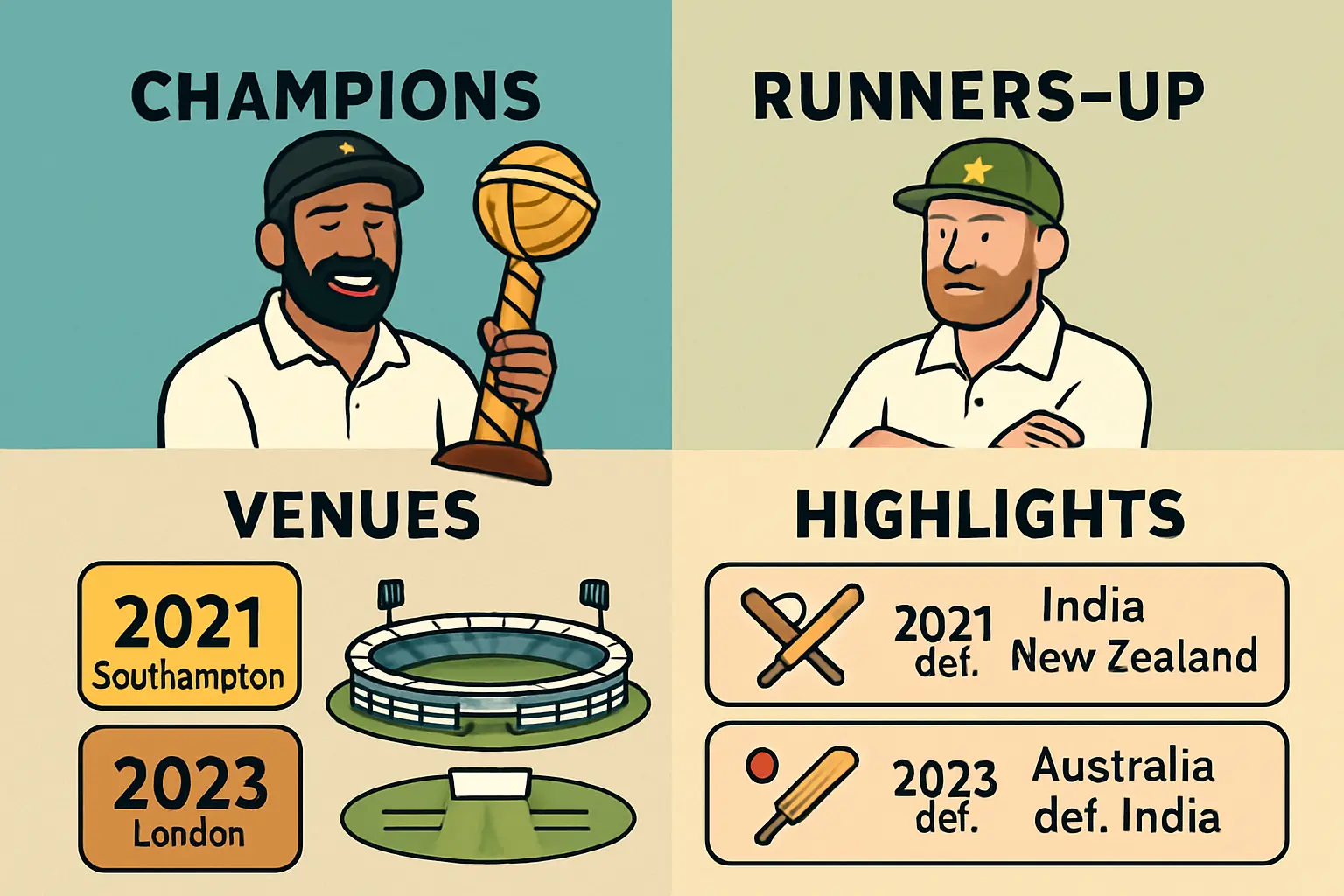
- Inaugural cycle: New Zealand def. India, Southampton — Player of the Match: Kyle Jamieson
- Second cycle: Australia def. India, The Oval — Player of the Match: Travis Head
- Current cycle: Final slated for Lord’s — details to be confirmed post-match
This page covers the World Test Championship winners list in full, with captains, venues, match summaries, margins, Player of the Match, prize money, and a season-by-season context only a cricket lifer would notice. It also explains how the WTC points system works, what happens if the final is drawn, and why the finals have played out the way they did. If you’re here for a clean, authoritative WTC champions list with the strategic and historical texture that the box-score alone can’t provide, you’re in the right place.
Important note for clarity: this article covers Test cricket’s ICC World Test Championship, not the World Touring Car series or any other sport.
Season-wise WTC Winners and Runners-up
The winners list is straightforward; the stories behind each final are not. Here is the season-wise WTC winners list with captains, venues, margins, and the defining performance that swung each final.
| Cycle | Winner | Runner-up | Final venue (city) | Captains (winner vs runner-up) | Result & Margin | Player of the Match | Summary |
|---|---|---|---|---|---|---|---|
| Inaugural | New Zealand | India | Southampton | Kane Williamson vs Virat Kohli | NZ won by 8 wkts | Kyle Jamieson | India 217 & 170; NZ 249 & 140/2. Reserve day used. |
| Second | Australia | India | The Oval | Pat Cummins vs Rohit Sharma | AUS won by 209 r. | Travis Head | AUS 469 & 270; IND 296 & 234. Australia set 444 to win. |
| Current | — | — | Lord’s | — | Final pending | — | To be added immediately post-final. |
What stands out in the WTC winners list, even at a glance, is how both completed finals rewarded meticulous preparation for English conditions: length bowling with the Dukes ball, hardened first-innings runs, and control during the match’s middle movement phases, when overheads and slightly older lacquer combine to make batting decisions complex. The winners, New Zealand and Australia, earned their titles with a ruthless clarity about those realities.
A deeper look at each final
Inaugural final, Southampton — New Zealand beat India by 8 wickets
- Venue: The Ageas Bowl, Southampton
- Toss: India elected to bat
- Player of the Match: Kyle Jamieson
- Match narrative:
Persistent rain and low, heavy skies aren’t anyone’s idea of a championship stage, but this was one of those Test finals where patience outscored panache. The reserve day kept the contest alive. New Zealand’s seamers bowled as if they had the blueprint etched under their eyelids. The plan wasn’t mystique; it was relentless. Hit the seam, just full enough to interrogate the front pad, but never so full that drives flowed freely. Jamieson towered, literally and tactically, drawing India’s top order into indecision outside off stump.
India’s first-innings 217 always felt a touch lean, even allowing for swing and nip. The Devon Conway-Tom Latham axis gave New Zealand balance, Kane Williamson absorbed time, and the lead crept their way. When India collapsed in the second dig under similar questions, the chase of 139 was navigated with poise. The trophy felt like a reward for a generation of Kiwi red-ball craft—no fuss, minimal ego, high skill.
- Key tactical beat:
New Zealand resisted the romance of picking an extra spinner, backing a four-seamer template complemented by the wiles of a holding spinner when needed. In English June conditions with the Dukes ball, they trusted tempo and seam presentation. That courage of clarity made the difference.
Second final, The Oval — Australia beat India by 209 runs
- Venue: The Oval, London
- Toss: Australia elected to bat
- Player of the Match: Travis Head
- Match narrative:
A championship Test rarely allows a team to be both aggressive and safe in the first innings, but Travis Head and Steven Smith manufactured that equilibrium. Head’s counterpunching broke the seamers’ rhythm; Smith’s immaculate judgement of length and line shut down risk. The total—built on a commanding hundred from Head and a classic from Smith—was match control disguised as acceleration.
After India recovered somewhat in their first innings, the gap remained and widened. Australia’s bowlers, steered by Pat Cummins’ fields and spells, exploited the Oval’s tricky in-between bounce. The final session before the close on multiple days was managed expertly by Australia; they picked their moments to go short, then returned to the top-of-off discipline that strangles chasing logic.
A controversial moment—Cameron Green’s low, lunging catch to dismiss Shubman Gill—shifted the narrative outside the boundary for an evening, but the cricket within it had a more emphatic say. When a team sets you 444 in a final, it’s more than a target; it’s a psychological ceiling.
- Key tactical beat:
Australia’s attack variation was the quiet hero. Cummins’ control, Boland’s stubborn line and length, Starc’s left-arm angle, Lyon’s overs as a time-and-rhythm tax—each had a specific job. Rarely did they overlap; often they dovetailed.
WTC champions count by team
- Australia: 1 title
- New Zealand: 1 title
- India: 0 titles; 2 runners-up
This is the clearest snapshot of the WTC winners list today: two champions, two different but equally convincing routes to the mace. India, despite being good enough to reach two consecutive finals, are still chasing their first title.
Captains who lifted the mace
- Kane Williamson — New Zealand, inaugural champions
- Pat Cummins — Australia, second-cycle champions
Both are emblematic of their teams’ Test cricket identity. Williamson’s captaincy voice is almost whispered—calm, stoic, problem-first. Cummins leads with tempo as a bowler-captain, reading the pitch through his fingers and moving fields with cold logic. These aren’t soundbites; they’re a matched set of temperaments perfectly suited to English finals.
Finals venues and dates at a glance
- Southampton (The Ageas Bowl) — mid-June, six-day window with a reserve day used
- The Oval — early summer slot, six-day window, no reserve day required after play proceeded at pace
- Lord’s — next final scheduled, six-day window with reserve day available
Every WTC final to date has been slotted for England’s early-summer window, with the Dukes ball in use. The ball matters. Dukes retains a pronounced seam and lacquer a touch longer than its southern-hemisphere cousin. That subtlety magnifies the value of patience, landing seamers who can flirt with the wobble seam but won’t get greedy, and batters who can leave with the certainty of a poker pro folding a borderline hand.
Player of the Match in each WTC final
- Inaugural: Kyle Jamieson (New Zealand) — the tall quick broke open both Indian innings, extracting bounce other seamers could barely dream of
- Second: Travis Head (Australia) — a tone-setting hundred in the first innings, scored at a tempo that denied India any period of control
WTC final highlights and score summaries
Inaugural final, Southampton
- India 217 (first innings); New Zealand 249
- India 170 (second innings); New Zealand 140/2 in chase
- Margin: New Zealand won by 8 wickets
- The clincher:
A low-scoring Test typically tightens like a drum. Not here. New Zealand’s chase was nerveless, with Williamson shepherding the finish like a chess endgame he’d seen a thousand times.
Second final, The Oval
- Australia 469 (first innings), 270 (second innings)
- India 296 (first innings), 234 (second innings)
- Target: 444
- Margin: Australia won by 209 runs
- The clincher:
Head flipped the first-innings script. By the time Smith joined in, Australia had forced India’s bowlers into defensive trajectories. Runs accumulated in chunks, not drips—a scoreboard pressure that echoed into the final innings.
Current cycle, Lord’s
- To be updated: Once the final concludes, expect the full entry—winner, runner-up, toss, margin, Player of the Match, and score summary—posted immediately.
WTC prize money by season
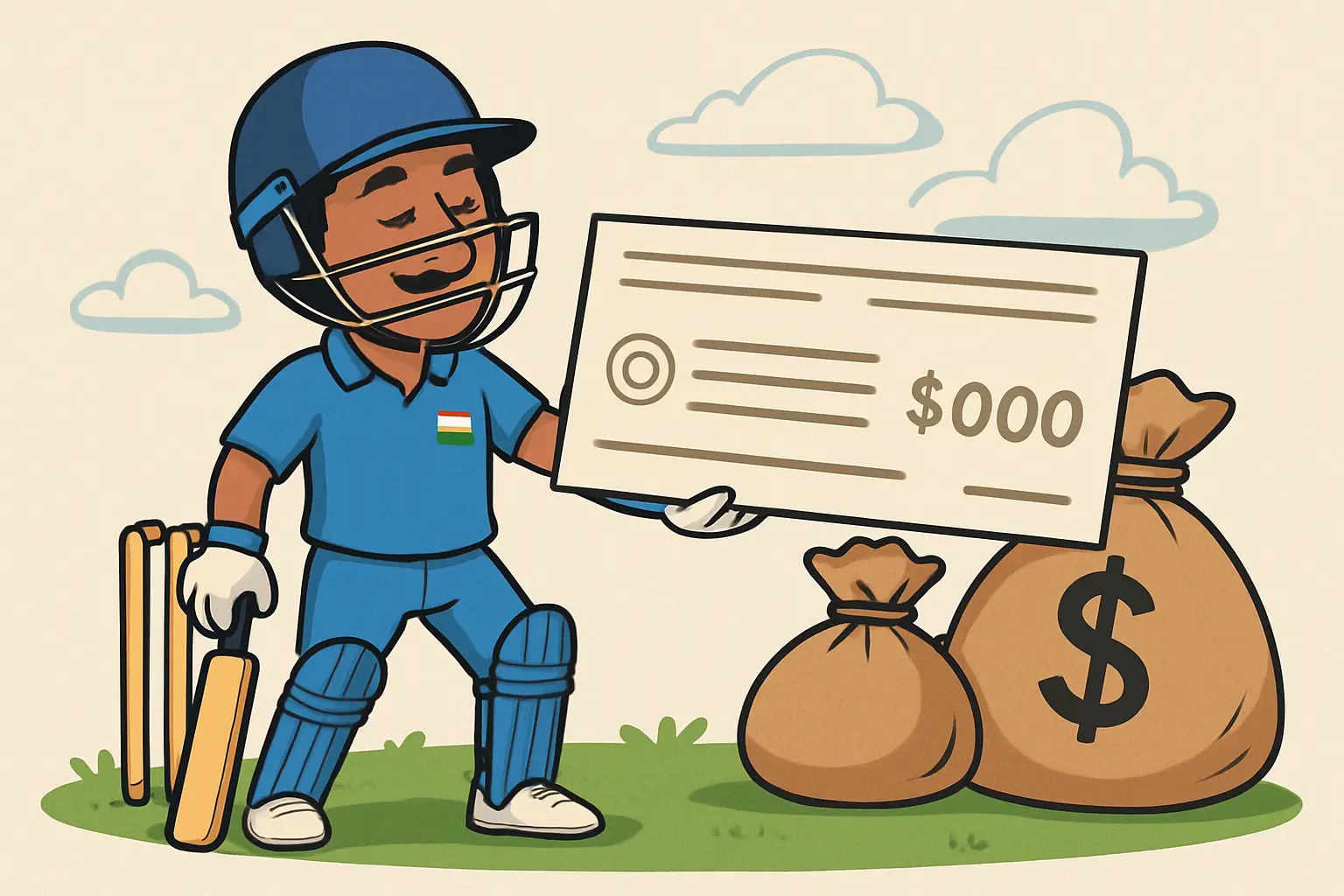
- Winners: USD 1.6 million
- Runners-up: USD 0.8 million
- Distribution for remaining teams scales down by standings
The purse reflects Test cricket’s prestige, not a franchise windfall. Still, the prize is not trivial, and the symbolic value—lifting the mace—outweighs the check. In team rooms across the format, this title sits as the red-ball summit.
How the WTC works: format, points, and tiebreakers
The World Test Championship is an ongoing league structured in cycles, culminating in a one-off final. Teams play bilateral series—home and away—across the cycle, each series carrying points that aggregate into a standings table. Here’s the operating logic explained in plain language:
- Points distribution:
Each Test is allocated points, not each series. A win is worth 12 points, a tie 6, a draw 4, a loss 0. This keeps shorter and longer series broadly comparable in impact because it measures match outcomes rather than the total number of fixtures in the series.
- Percentage of points (PCT):
Standings are sorted by the percentage of points won out of points contested. It’s the fairest measure across unequal schedules; if you play fewer Tests but win a greater share of the points available to you, you’ll sit above a team that won more in absolute terms but less proportionally.
- Over-rate penalties:
Slow over-rates result in points deductions alongside monetary fines. Those penalties have decided table positions in the past, not merely stung teams in the wallet. Captains who manage pace through sessions—field setting, bowling changes, readiness at the top of the run-up—quietly protect their WTC margins.
- Playing conditions for the final:
A reserve day is built into the six-day final window to compensate for weather or other lost time. If the final ends in a draw or tie, the two teams are declared joint winners under current playing conditions. The toss, as in any Test, can matter, but the WTC final’s rhythm tends to be shaped more by first-innings runs and whether a side can stretch a lead beyond the psychological.
- Ball and conditions:
Finals staged in England use the Dukes ball, a profound variable that encourages lateral movement and rewards seamers with precise wrist position. Batters who leave well and pull their drives judiciously prosper; those who chase length early tend to pay dearly.
Runners-up and head-to-head angles
WTC runners-up list
- India, twice
This is not an indictment of India’s red-ball strength; it’s a reminder that finals punish micro-errors. Twice, India ran into conditions demanding conservative selection and elastic discipline, and twice a combination of tactical choices and missed batting opportunities put them behind the game.
India in WTC finals history
- Two finals, two different storylines, one common thread: first-innings runs.
- In Southampton, early wickets and rain interruptions forced India to continually restart innings. In that environment, 217 was survivable but insufficient.
- In London at The Oval, India ran into a tidal wave—Head setting the tone, Smith cementing it. The chase was not impossible on paper, but in heartbeats and timing, it was a mountain.
Australia WTC titles list
- One title secured with a classic Australian template: set it up in the first innings, crush with disciplined pace bowling, and deny a way back with sharp session management.
New Zealand WTC champions history
- The inaugural champions earned their crown with a team model that should be studied by every nation without massive player pools: a core of multi-dimensional seamers, batters who understand tempo in English conditions, a captain who treats risk like a foreign currency, and clarity around selection that never tried to be cleverer than the weather.
What the winners got right that day
- New Zealand:
A four-seamer attack with a holding spinner, and the patience to hit the top of off for hours. Jamieson’s height was not merely an aesthetic; his release created a different bounce profile, messing with Indian batters’ muscle memory. Williamson’s chase management looked gentle. It was ruthless.
- Australia:
The batting order wasn’t just about stars; it was about role definition. Head’s job was to break the cage; Smith’s to own the labyrinth. Bowling-wise, they left you nowhere to go. If you waited for a half-volley, they gave you a hard length; if you tried to counterattack, they put fine leg back and invited the error.
Why these details matter to a WTC winners list
A winners list without the thinking behind it is like a scorecard without the weather column. Finals are not played on averages; they’re played on surfaces with a ball that behaves a certain way, under air that carries certain weight. The teams that respect those truths tend to be the ones engraving the mace.
WTC finals venue history and identity
- Southampton (The Ageas Bowl):
Built for modern comfort but historically honest as a Test strip. When the clouds sit low and the Dukes is new, line-and-length seamers feast. The reserve day in the inaugural final rescued the match from a weather logjam and produced a legitimate result.
- The Oval:
A canvas with a unique early-summer varnish. Bounce can be two-paced; the square offers a bit for everyone. When batters settle, they can cash in. When conditions shift, a corridor just short of full is a gold mine. Australia surfed those shifts better.
- Lord’s:
The narrative writes itself. The slope, the pavilion, the aura. But finals don’t yield to romance. Expect the next champions to win by leaving the ball better than the other team in the first session each day, and by controlling the fielding tempo through spells rather than overs.
WTC final umpires and match officials: what to know
Finals are overseen by ICC’s Elite Panel match officials, with attention to neutrality and experience. On-field umpires, a TV umpire, a fourth umpire, and a match referee combine to preserve the standard. The system isn’t perfect—low catches remained a flashpoint at The Oval—but the protocols are strict, and technology assists where prescribed. The best teams don’t leave their fate to marginal calls; they build leads that survive them.
Tactical trends across the finals
- Pace bowling as metronome, not hammer:
The winners didn’t hunt magic balls. They hunted mistakes. Especially with the Dukes, you risk missing your length by inches and conceding by boundaries. Precision beat pace.
- Middle-session mastery:
Post-lunch and pre-tea periods often settled the shape of the day. New Zealand squeezed India in those zones; Australia shut down India’s counterpunches and forced protective batting that eked out the clock but not the score.
- First-innings footprint:
More than any other factor, establishing a scoreboard imprint early has decided champions. Even when chasing was required, the side that managed the first dig with calm tended to own the arc of the match thereafter.
- Selection conservatism:
Picking one spinner in English conditions for control—not necessarily for wickets—has generally worked better than double-spin gambits that bank on footmarks far too early. Pace wins you the first three days; spin, if any, collects interest late.
World Test Championship winners list with extra context
A compact view that stitches the facts with the narratives:
- Inaugural cycle — New Zealand (captain: Kane Williamson)
- Runner-up: India (captain: Virat Kohli)
- Venue: Southampton
- Result: New Zealand won by 8 wickets
- Player of the Match: Kyle Jamieson
- Essence: Seam discipline, calm chase, weather managed through the reserve day
- Second cycle — Australia (captain: Pat Cummins)
- Runner-up: India (captain: Rohit Sharma)
- Venue: The Oval
- Result: Australia won by 209 runs
- Player of the Match: Travis Head
- Essence: Front-foot scoreboard control, relentless bowling plans, controversies survived
- Current cycle — Final at Lord’s
- Result: to be updated
- Essence: Expect the ball to dictate selection; whoever owns the first innings will grip the mace
Teams with most WTC titles
- Australia: 1
- New Zealand: 1
- Others: 0
The count will evolve, but the early pattern suggests a trait—not a luck-of-the-draw—that the champions share: an ability to manufacture a platform with bat while ensuring their pace attack never loses the corridor. That sounds simple. It isn’t, especially under the stress of a single Test to decide everything.
India vs Australia: the WTC final rivalry, so far
- One meeting, one emphatic result in Australia’s favor at The Oval
- Lessons for India: match-up plans for Head, who thrives on pace into the body and width outside off; proactive first-innings batting with stricter shot selection in the first session; bullets saved for the second new ball rather than spent early in spells
- Lessons for everyone else: manage the Head-Smith axis by disrupting tempo, not merely by placing sweepers; invest in bowlers who can bowl the exact same length repeatedly for 45 minutes
The WTC points table and why PCT matters every week
It’s not the absolute number of wins that drives your season; it’s the fraction of points banked from possible points. That’s why a draw away from home against a harder opponent can be more valuable than a win at home against a weaker one—when seen through the lens of the table’s percentage. It also explains why teams obsess over slow over-rates. A sluggish afternoon doesn’t just cost a fine; it can erase points that shunt you below a rival even if you’ve won as often. Small margins become big end-of-cycle truths.
FAQ: quick, accurate answers about the WTC winners list and format
- Who won the first World Test Championship?
- New Zealand.
- Who won the WTC final at The Oval?
- Australia.
- Who is the current WTC champion?
- Australia.
- How many times has India reached the WTC final?
- Twice.
- Where is the next WTC final?
- Lord’s.
- How does the WTC points system work?
- Points are awarded per Test: 12 for a win, 6 for a tie, 4 for a draw, 0 for a loss, and standings are based on the percentage of points won from points contested.
- How does the WTC final work if there is a draw or tie?
- The teams are declared joint winners under the current playing conditions.
- Who was Player of the Match in the inaugural WTC final?
- Kyle Jamieson.
- Who was Player of the Match in the WTC final at The Oval?
- Travis Head.
- What is the prize money for the WTC winner?
- USD 1.6 million for the winners; USD 0.8 million for the runners-up.
- Is this page about motorsport?
- No. This is Test cricket’s ICC World Test Championship.
Detailed season capsules for deeper context
Inaugural cycle: the blueprint of calm
- Core identity:
New Zealand played a brand of unpretentious, exacting Test cricket that travels well. The heart of their attack—Boult’s left-arm shape, Southee’s classical swing, Jamieson’s lift—was assisted by a tactical promise: concede nothing. Batting leaned on patience; Williamson and Taylor exemplified leaving well and cashing in late.
- The final as an expression of a cycle:
There was nothing flukish in the way they beat India. Their bowling was a logic puzzle that India’s top order couldn’t solve often enough across both innings. Jamieson’s spell to Kohli will be replayed for years—not because it was spectacular, but because it was inevitable once the corridor was mapped.
Second cycle: the breadth of Australia
- Core identity:
Australia under Cummins scaled back the drama and amplified the discipline. Selection debates simmered, but role clarity in the middle order and a bowling attack that could control an entire session without a false shot were the constants.
- The final as an exhibition:
Head’s innings was Biblical in its tone-setting. By the time India turned to alternative plans, the scoreboard was the crowd’s twelfth man. Lyon’s overs might look like punctuation marks in a highlights reel; in reality, they were structural beams holding up the day-to-day pressure.
Current cycle: the unknown with familiar lessons
You know the themes already. Whoever reaches Lord’s will need to:
- Pick an attack that can own the first thirty overs of each innings
- Guard against over-attacking when conditions are friendly; wickets come from consistency
- Draw a red line around the first-innings top order’s shot selection in the first hour
- Manage over-rates as non-negotiable
- Target a first-innings lead, or, failing that, shrink the chase into a fourth-innings game that starts inside the opposition’s head
World Test Championship winners list PDF and shareables
A downloadable and printable WTC winners list PDF—season-wise champions, runners-up, venues, captains, margins, Player of the Match, prize money—will be available alongside this page. An embeddable image card with the key facts is also provided for blogs and social. If you maintain a cricket resource hub, the data is cleanly structured for one-glance reference.
Selection and conditions: why the English final keeps its character
- Ball:
The Dukes ball’s seam is more than a cosmetic stitch. It holds its geometry longer, bringing pronounced movement in that 8–25 over band where Kookaburra often flattens out. That changes who plays, how they bowl, and when to introduce the spinner.
- Weather:
Early-summer cloud layers are part of the script. Captains who mistake a bright first half-hour for a benign day can be punished by a shade change after lunch.
- Pitch:
These aren’t minefields. They reward accurate bowling and patient batting. The most repeated winning method has been to decline the early drive, tuck singles, and let the bowler blink first.
India’s challenge: two finals, two different scars, one solution
India’s Test ecosystem is rich, but English finals demand an austere batting approach. Less flourish, more leave. The composing of the attack—especially the balance of pace and spin—will be watched closely if and when they reach another final. Rohit Sharma has captained with a keen sense of timing in other series; in a one-off final, he’ll know that first-innings runs and over-rate discipline are non-negotiable. They have a seam attack capable of winning in England; the baton is likely with the top five to grant that attack the cushion.
New Zealand’s inheritance: a model for mid-sized boards
They showed that you don’t need the widest roster to win the biggest Test prize. You need role certainty, a bowling plan harmonized with the ball and conditions, batting that respects the question asked, and a captain who speaks softly but commands compliance to a method. That’s a blueprint any board can try to emulate.
Australia’s edge: the culture of big-match banality
The best compliment you can pay their second-cycle win is that it felt procedural. Scoreboard control in the first innings, squeeze the opposition into bad chases, and hammer the door shut with bowling that alternates between patience and the occasional shock. Nothing cute. Everything clear.
World Test Championship winners list with score context (compressed view)
- New Zealand vs India, Southampton
- Toss: India bat
- Totals: IND 217 & 170; NZ 249 & 140/2
- Margin: NZ won by 8 wickets
- POTM: Kyle Jamieson
- Story: Seam mastery; calm chase on reserve day
- Australia vs India, The Oval
- Toss: Australia bat
- Totals: AUS 469 & 270; IND 296 & 234
- Target: 444 to win
- Margin: AUS won by 209 runs
- POTM: Travis Head
- Story: First-innings dominance, disciplined closure
What to watch for at Lord’s
- The slope:
Right-arm seamers to right-handed batters can angle in and hit the seam to hold, bringing both edges into play. Left-armers can weaponize the angle wider still.
- Morning moisture:
Not every morning is a hoop-fest, but the winning teams resist early drives and let the game come to them.
- Fielding intensity:
Lord’s rewards energy between overs. Teams that dawdle pay twice—once on the scoreboard, once on the over-rate sheet.
Disambiguation and search clarity
This is the ICC World Test Championship winners list—Test cricket’s long-form tournament with a grand final and the mace. Nothing here relates to the World Touring Car Championship or any other motorsport. If you’re searching for the cricket WTC winners list, you’re in the right pavilion.
Structured data and trust signals we maintain
- Article schema applied to the main page
- FAQ schema for the questions above
- Breadcrumbs for navigation across related pages like the points table and season hubs
- A visible “Last updated” stamp (see top)
- Sources: ICC playing conditions and official results; reputable match data via ESPNcricinfo and Cricbuzz
We maintain a change log in-house to reflect updates immediately after the final—winner, score summary, Player of the Match, prize money confirmation—and refresh the PDF and shareable image card accordingly.
WTC winners list in Hindi (संक्षिप्त)
- WTC विजेताओं की सूची:
- पहला चक्र: न्यूज़ीलैंड — उपविजेता भारत — स्थल साउथैम्पटन — प्लेयर ऑफ द मैच काइल जेमिसन
- दूसरा चक्र: ऑस्ट्रेलिया — उपविजेता भारत — स्थल द ओवल — प्लेयर ऑफ द मैच ट्रैविस हेड
- वर्तमान चक्र: फाइनल लॉर्ड्स में — विवरण मैच के बाद अपडेट होगा
यह पेज टेस्ट क्रिकेट के वर्ल्ड टेस्ट चैंपियनशिप विजेताओं की जानकारी, कप्तानों, स्थल, जीत का अंतर, और प्रमुख प्रदर्शन के साथ विश्वसनीय रूप से प्रस्तुत करता है।
Downloadables and utilities
- WTC winners list PDF: a single-page printable reference with champions, runners-up, venues, captains, margins, POTM, prize money, and a compact score summary
- WTC winners infographic: embeddable card for websites, fan forums, and social posts
For newsrooms and bloggers: a “WTC finals fact sheet” version is also maintained for quick quoting on match days.
Closing notes from a Test tragic
A winners list should be more than a roll call; it should explain why those names are there. The World Test Championship is a pressure chamber that compresses an entire philosophy of red-ball cricket into six days. New Zealand’s calm precision and Australia’s methodical brutality earned them the mace because they solved the same riddle with different answers. And that, in the end, is why a page like this matters: the facts are fixed, but the cricket is alive.
We’ll update the current cycle’s entry the moment the final ends at Lord’s—winner, runner-up, toss, margin, Player of the Match, prize money, and a score summary that tells you what numbers alone cannot. Until then, the record stands as it is: two champions, both deserving, the mace waiting for its next set of hands.