

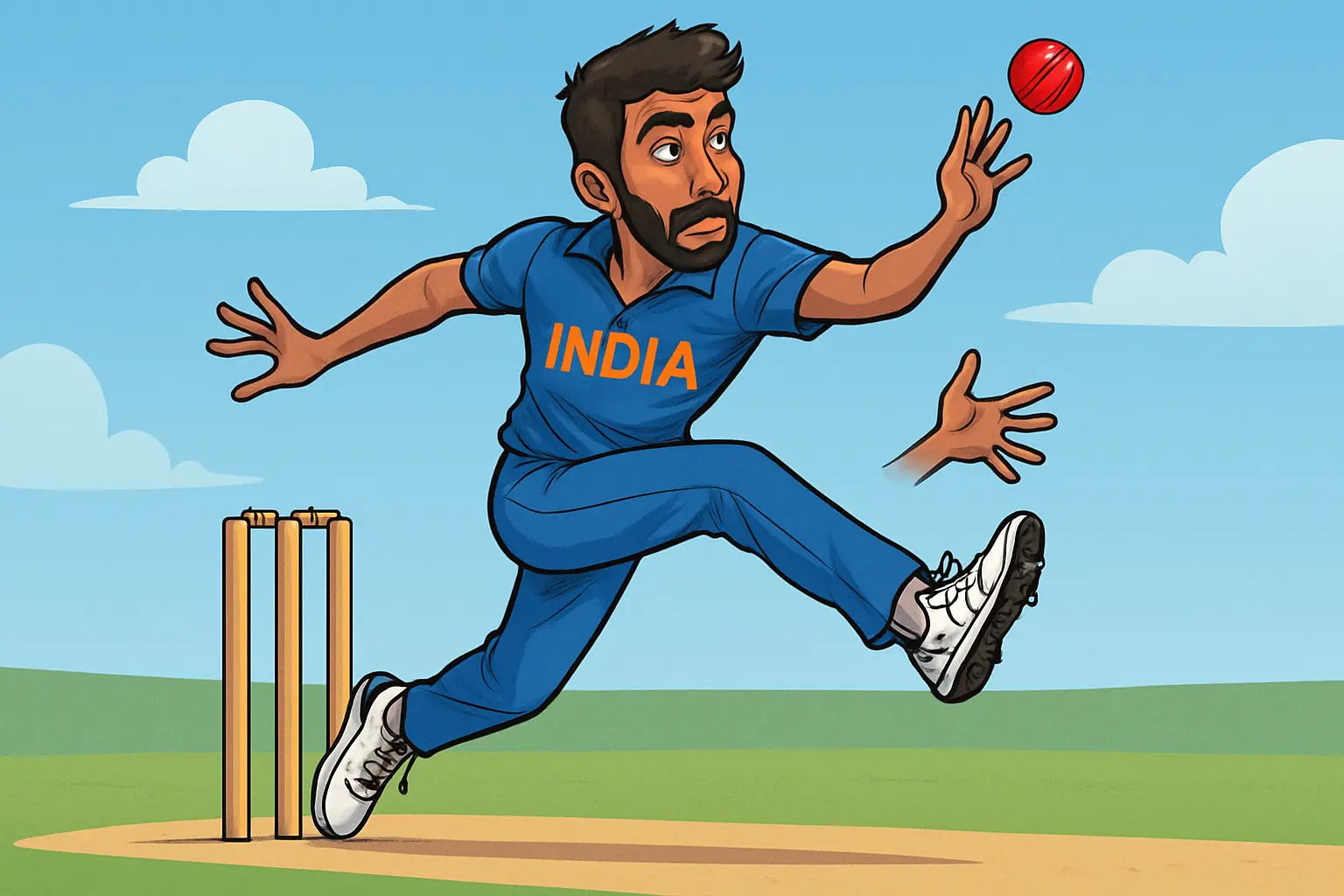
There’s a scent to great bowling you can pick up before the ball even hits the seam. A hush in the air. A bowler’s boots scuffing a ridgeline on the run-up. The batsman instinctively checking the fielders square on the off side because the ball’s going to kiss, nip, and make a mockery of length. The best bowler in the world isn’t just a set of numbers or a high ICC rating; he’s the spell that tilts the match, the one who knows how to move a game with small adjustments most people don’t even see.
One-sentence verdict: Jasprit Bumrah is the best bowler in the world right now, across formats, because no one else controls phases, conditions, and pressure moments with the same eerie consistency and variety.
Why that answer?
Because the real race for the world’s best is decided in the margins: how a bowler moves the seam by a whisker when the ball is soft, how he flips a plan at the top of his mark, how he wraps up the tail without giving the set batsman a sniff. Let’s go deep, across Test, ODI, and T20I cricket, across leagues and conditions, through metrics that actually matter, and through the intangibles that separate great from generational.
How the best bowler in the world is decided: methodology that mirrors real cricket
The ICC bowling rankings reward consistency and recent form. Good. But a specialist’s value in T20 isn’t the same as a Test bowler’s ability to run through an order on a flat fifth day. To get to the true no 1 bowler in the world, we blend rankings context with the match-winning lens selectors, analysts, and batters feel in their bones.
Table: What we value when naming the world’s best bowler
| Criteria | Why it matters |
|---|---|
| Phase control (powerplay, middle, death) | Winning cricket is phase-based; controlling the new ball and closing the innings is priceless. |
| Format breadth (Test, ODI, T20I) | All-format excellence amplifies scarcity and value. |
| Conditions adaptability (swing, seam, reverse, spin support, flat pitches) | Travel, day-night games, and varying balls reward adaptability. |
| Strike rate and wicket quality | Taking top-order wickets changes win probability more than tail-end cleanups. |
| Economy (especially T20 and ODI) | Dot-ball pressure creates mistakes; economy forces batters into bad options. |
| Tactical tools (seam wobble, yorker, bouncer, slower balls, wrist-spin variations) | Solutions for every batter and situation. |
| Big-match temperament and repeatability | Knockouts, fourth innings, and chases expose pretenders. |
| Injury resilience and workload management | Availability is a skill; elite repeatability across workloads is rare. |
The case for Jasprit Bumrah as the world’s best bowler
You can tell a bowler’s ceiling from their worst days. Bumrah’s “off days” are still two wickets and an economy that keeps his team alive. That’s the mark of the world’s best.
- Action and seam: Bumrah’s hyper-vertical arm path and late wrist position sprint the seam upright for longer. That upright seam isn’t just cosmetic; it keeps both edges in play. His stock ball is a scrambled-seam or wobble-seam that jagged superstars in English and South African conditions, and he carries that same threat onto flatter decks through pace and late dip.
- The yorker as a normal ball: Most fast bowlers treat the yorker like a death-overs party trick. Bumrah treats it like a length. He can hit full at will — off stump, leg stump, or wider for the reach-and-miss — then slip in the off-pace dipper that looks identical out of the hand.
- Death overs control: In T20 cricket, he’s a metronome at the death because he changes speed without losing trajectory: 140-plus with a pacy, skidding yorker; 130s with the dipping off-cutter; 120s with the knuckleball that dies after pitching. Batters see length, they misread speed, they toe-end.
- Test cricket authority: Away spells decide greatness. Bumrah’s new-ball method is simple and ruthless: short-of-a-length, straight, seam wobbling, fields set for both edges, with a bouncer that’s much faster than it looks because the load-up is so compact. Later, when the ball is older, he shifts to reverse swing and cutter lengths, hunting stumps. The repeatability is frightening.
- ODI adaptability: With two new balls and more fielders out early than T20, ODI bowling is about controlling zones. He bowls cross-seam into the hard length to kill timing on placid surfaces, and when there’s hint of movement, he goes full to nick off top order. He is as close as modern cricket gets to guaranteed control.
- Big-match heartbeat: The best bowlers in the world are drawn to pressure. It is not a coincidence that Bumrah’s most exacting spells arrive when games tighten. You see it in short bursts after breaks, at the start of day five, at the end of white-ball innings.
Best Test bowler in the world: why the red-ball crown matters
If you define greatness by the long format — as many purists and analysts do — the shortlist narrows to the masters of line and length who can move the ball just enough. Pat Cummins, Kagiso Rabada, Josh Hazlewood, Ravichandran Ashwin, and Jasprit Bumrah dominate any Test bowling conversation; Nathan Lyon’s relentless precision earned him the respect of dressing rooms everywhere.
- Pat Cummins: A gold standard for repeatable hard length. The ball passes the top of off stump at head height with that steep, awkward bounce that threatens gloves and top edges. He wins on Australian pitches and transfers seamlessly to England or South Africa because his ball doesn’t rely on extravagant movement — it relies on unplayable bounce length.
- Kagiso Rabada: Raw pace with an A-grade shoulder position. Rabada’s wrist stays behind the ball, which means his wobble-seam stands up and bites. He wins both early and at the end with reverse, and his ability to fire a perfect bouncer without telegraphing it keeps batters locked on the crease.
- Josh Hazlewood: If you sat a young quick down and said “this is line and length,” you’d show them Hazlewood. Same spot, same seam, unyielding. There’s swing early when it’s around, but the real magic is how many ways he can beat a batter on that one, ruthless line. You don’t get easy leaves, and you don’t get freebies to clip.
- Ravichandran Ashwin: The best off spinner in the world in Tests. He’s a laboratory disguised as an artist. Seam-up off breaks, carrom balls, leg-break projections, variations in seam angles and pace that catch inside edges and pad-in-lines. He towers over right-handers at home and has engineered methods overseas — a rare, thinking cricketer who’s evolved several times.
- Jasprit Bumrah: The complete set for Tests — new ball menace, middle-overs squeeze, and late reverse. He takes high-value wickets and bowls spells that hit the game like a thunderclap.
The best ODI bowler in the world: middle-overs stranglers and new-ball assassins
Modern ODI cricket is won by either ripping through early or choking the middle. Mitchell Starc, Trent Boult, Mohammed Shami, Jasprit Bumrah, Josh Hazlewood, and Rashid Khan define the spectrum.
- Mitchell Starc and Trent Boult: Left-arm swing at pace still terrifies top orders. Starc’s inswinger at the stumps lampoons front pads and forces batters into the most primitive mistake in cricket: planting. Boult is subtler — he traps you at the crease with late movement and fields for the clip; the outswinger to right-handers is one of the game’s classiest sights.
- Mohammed Shami: The seam whisperer. He bowls upright seams that jag contingency into every over. You think you’re set, then one zips back and your shape disintegrates. His split of top-order wickets makes analysts purr.
- Rashid Khan: The leg spinner who acts like a fast bowler in intent. Rashid wins by stealing your time. Arm speed is rapid, the shoulder tilt delivers late spin, and the googly is so close to the leg break that hand-readers are doomed. Middle overs become a minefield.
- Jasprit Bumrah: New ball, middle overs, and death. Few have a full ODI blueprint like his. There’s a reason coaches start with him when mapping out fifty-over bowling plans.
The best T20 bowler in the world: powerplay swing vs death-overs craft
T20 is a specialist sport, and the best T20 bowlers are defined by phase discipline. Rashid Khan, Jasprit Bumrah, Josh Hazlewood in the powerplay role, Sunil Narine as a mystery package, Shaheen Afridi with the new ball, and variations wizards like Mustafizur Rahman create matchups that win tournaments.
- Rashid Khan: Best T20 leg spinner in the world. He hunts wickets in the middle overs, which is the rarest T20 skill. Wicket-taking spinners are more valuable than pure economy merchants because they break partnerships and force new batters to start on slow surfaces with fielders out.
- Jasprit Bumrah: Best death overs bowler in T20. He shapes chases. It is one thing to protect 20 off 12; it’s another to do it consistently by hitting yorkers on ankle bones and mixing pace to perfection.
- Josh Hazlewood: In T20 he’s a new-ball strangler. Test match length in the powerplay starves batters of width. The dots overwhelm them into risk.
- Shaheen Afridi: Best left-arm fast bowler in T20 powerplays. Angles, pace, and late swing draw front pads and drive errors. He can be expensive later, but his value in early breakthroughs is immense.
- Sunil Narine: The original mystery spinner of T20. Subtle changes in grip and finger pressure create full-ball illusions. Left-handers struggle to line him up; right-handers are fed variations until their bat paths tangle.
Table: Format leaders and their signature strengths (expert picks)
| Format | Leader & Strengths | Alternatives |
|---|---|---|
| Test cricket | Jasprit Bumrah — All-phase threat with reverse swing and hostile hard length. | Pat Cummins, Ravichandran Ashwin, Kagiso Rabada, Josh Hazlewood. |
| ODI cricket | Jasprit Bumrah — New-ball control with elite death overs. | Mitchell Starc, Trent Boult, Mohammed Shami, Rashid Khan. |
| T20I cricket | Rashid Khan — Middle-overs wicket machine. Death: Jasprit Bumrah. Powerplay: Shaheen Afridi. | Josh Hazlewood, Sunil Narine, Mustafizur Rahman. |
Metric-driven view: average vs strike rate vs economy, and what really wins games
- Bowling average: Runs per wicket. A broad quality metric but context-dependent; flat pitches can balloon it, juicy mornings can flatter it.
- Strike rate: Balls per wicket. The king of red-ball metrics and underrated in white ball. High strike rate bowlers move win expectancy more than “dryness-only” operators.
- Economy: Runs per over. In T20, this is oxygen. In ODI middle overs, it creates desperation; at the death, it is often defined by yorker accuracy and deception.
- Dot-ball percentage: The heartbeat of pressure. T20 and ODI analysis has evolved toward dot rate because it’s repeatable and tends to co-vary with wickets under pressure.
- Phase splits: The real differentiator. Powerplay specialists need swing or accuracy to left-right angles; middle-overs bowlers need deception; death specialists need execution and composure.
Expert reading: the best bowler in the world balances strike rate and economy across phases. That’s why Bumrah’s value is unmatched; even when he doesn’t take wickets early, he bleeds dot balls and finishes with the scalps that decide games.
Phase-wise specialists: who wins in each window
| Phase | Specialists & Elite Qualities |
|---|---|
| Powerplay T20/ODI: |
|
| Middle overs: |
|
| Death overs: |
|
Superlatives and specialist crowns: yorker king, swing king, fastest, and more
- Yorker king of world cricket: Jasprit Bumrah. He makes the most difficult delivery in pace bowling look boringly routine and lands it from very wide on the crease or tight at the stumps without a tell.
- Swing king of world cricket: James Anderson in the classical sense. He reads cloud cover and humidity like a barometer, uses the wobble seam and conventional swing, and targets top-of-off like a religion. Among left-armers in limited-overs cricket, Trent Boult’s new-ball swing is a masterclass, and Mohammed Shami’s late seam deviation pairs with this conversation.
- Fastest bowler in the world: The speed gun frequently pulses for Mark Wood, Lockie Ferguson, Haris Rauf, and Umran Malik. Pace alone doesn’t define “best,” but it changes footwork and pushes batters deep in the crease, which is often all you need to open a gate.
- Best left-arm fast bowler: Across formats, Trent Boult and Mitchell Starc headline the ODI and Test spaces; Shaheen Afridi is the T20 powerplay apex predator and increasingly pivotal in ODIs too.
- Best leg spinner in the world: Rashid Khan for T20 and ODI impact; in Tests, the conversation bends to wrist-spin scarcity, with talents like Kuldeep Yadav and Yasir Shah carrying the torch on certain surfaces.
- Best off spinner in the world: Ravichandran Ashwin in Tests, with his toolkit of seam positions, angles, and speeds. In T20, Mujeeb Ur Rahman’s carrom-ball-led plan and Washington Sundar’s stump-to-stump discipline often win matchups.
- Best mystery spinner T20: Sunil Narine’s changes of fingers and wrists continue to befuddle, while Maheesh Theekshana’s subtle pace shifts and flat trajectory turn dot-ball stretches into chokeholds.
Conditions, venues, and opposition: who is best where it actually matters
Great bowling is a context sport. You’re not asking, “Who has the prettiest numbers?” You’re asking, “Who wins me the exact spell I need on this pitch in this session against these batters?”
- Best bowler in swinging conditions: James Anderson in the red ball, Trent Boult and Mohammed Shami in white ball. They find the edge with tight lines and late addition of movement rather than big hoopers you can line up.
- Best bowler on turning tracks: Ravichandran Ashwin and Ravindra Jadeja strangulate with the old dance: one turns past edge, one holds. In white ball, Rashid Khan and Kuldeep Yadav use drift and drop rather than just turn.
- Best bowler on flat pitches: Jasprit Bumrah and Pat Cummins. Hard length, shoulder-seam heat. They win lbw/bowled with late movement and ruthless execution. Add Mustafizur’s cutters when the surface grips.
- Best bowler in day-night Tests: Skills for twilight: high release, seam control, and willingness to pitch the ball up. Bumrah, Hazlewood, Anderson, and Cummins are elite here.
- Best bowler vs left-handers: R Ashwin at home, where he sets up the round-the-wicket drift and hits the stumps; Josh Hazlewood with his away-angle into the corridor, and Boult with swing. Versus right-handers, Rabada’s nip-backer and Bumrah’s wobble seam are nightmares.
- Best bowler in the subcontinent: Ashwin and Jadeja in Tests; Kuldeep for strike bursts. In white ball: Bumrah’s change-ups and hard length, Rashid Khan on dry decks, and Mustafizur’s algorithm of cutters.
- Best bowler in England summer: Anderson with the dukes ball is textbook; Hazlewood, Cummins, and Bumrah thrive by staying within the channel and letting the ball decide last.
- Best bowler at iconic venues:
- Lord’s: Anderson’s slope management, plus Boult’s left-arm angle.
- Eden Gardens: Reverse swing creeps in; Bumrah and Shami feast.
- MCG: Bounce merchants like Cummins dominate; Lyon’s overs grow in value late in the day as footmarks bite.
Country-wise leaders: the best from each powerhouse and rising nation
- India: Jasprit Bumrah is the best Indian bowler in the world and the world’s best, period. Ravichandran Ashwin is the premier Test off spinner. Mohammed Shami is a top-tier ODI quick. Kuldeep Yadav brings wicket-taking wrist spin in white ball. In T20 leagues, Yuzvendra Chahal’s tallies tell a story: he’s a relentless wicket-hunter.
- Pakistan: Shaheen Afridi is the spearhead, especially new ball in T20Is and ODIs. Haris Rauf as a death-overs T20 operator is invaluable. Naseem Shah is the all-format artist in the making — control, new-ball kiss, and reverse threat.
- Australia: Pat Cummins is a blueprint quick; Josh Hazlewood remains a metronome; Mitchell Starc is still the fullest, fastest menace in white-ball crunches. Nathan Lyon’s relentless Test control made him a time capsule of off spin done right.
- England: James Anderson is the king of swing in Tests. Mark Wood’s pace stretches batting techniques to breaking point. Adil Rashid remains the most trusted ODI and T20 wrist spinner, especially to right-handers through mid-innings.
- New Zealand: Trent Boult’s new-ball rhythm is unmatched; Tim Southee’s slower-ball and knuckleball evolution in T20 is underappreciated. Lockie Ferguson’s pace-off and pace-on mix is a tactical weapon.
- South Africa: Kagiso Rabada is a strike rate monster. Anrich Nortje gives severe pace when fit. Keshav Maharaj’s white-ball economy does quiet damage.
- Sri Lanka: Wanindu Hasaranga is a T20 master at ripping through middle orders. Maheesh Theekshana is a powerplay asset with new-ball mystery.
- Bangladesh: Shakib Al Hasan’s white-ball savvy, Mehidy Hasan Miraz’s control, and Mustafizur Rahman’s cutters on tacky decks are a trident.
- Afghanistan: Rashid Khan is the best T20 leg spinner; Fazalhaq Farooqi’s left-arm swing and Nabi’s powerplay drift add structure.
- West Indies: Alzarri Joseph’s bounce and hit-the-deck pace, Akeal Hosein’s white-ball shape and carrom-ball usage, and Sunil Narine’s reinvention are central to their T20 identity.
League and tournament lenses: IPL, PSL, BBL, The Hundred, CPL
Leagues separate the specialists from the reputations. Pitches change every few days, matchups are micromanaged, and phase roles are sacred.
- Best bowler in IPL right now: Jasprit Bumrah for death overs composure and powerplay strike bursts; Rashid Khan as the middle-overs banker; Mohammed Shami’s new-ball skill previously set the tone; Varun Chakravarthy’s hold on two-paced pitches is potent; Yuzvendra Chahal remains a consistent wicket-taker.
- Best bowler in PSL: Shaheen Afridi defines the powerplay, Haris Rauf and Naseem Shah turn speed into drama, and Shadab Khan’s leg spin doubles as tactical flexibility.
- Best bowler in BBL: Pace-bounce merchants flourish, but spinners like Adam Zampa and Mujeeb Ur Rahman consistently bank value through control.
- Best bowler in The Hundred: The shortened block rewards repeatable skills and pace-off deception; slow-ball specialists with length control have outsized influence.
- Best bowler in CPL: Sunil Narine controls phases and takes the new ball; Alzarri Joseph and Obed McCoy’s angle and cutters suit Caribbean surfaces.
Best bowler in women’s cricket
Too often, conversations about the world’s best ignore women’s cricket. That era is over. The elite are building careers that stand beside any standard.
Sophie Ecclestone is the best women bowler in the world. As a left-arm orthodox spinner, she offers an extraordinary blend of control and attacking threat. Flight and drop are measured to the decimal, angles change ball to ball, and her read of left-right matchups is first class. She is relentless across formats, with a T20 chokehold and ODI dominance. Batters rarely hit through her; they’re made to hit against spin, away from the sweepers, into the trap.
Shabnim Ismail brought pure pace to the women’s game, and even as international retirements shift the cast, her league showings remain electric.
Megan Schutt’s swing and back-of-the-hand slower ball define powerplay mastery; Amelia Kerr’s leg spin and batting growth create all-round impact; Deepti Sharma’s off spin and death-overs smarts in T20 craft wins; Renuka Thakur’s new-ball swing is a dream in seaming conditions.
Table: Women’s bowling leaders and what sets them apart
| Bowler | Key Strengths |
|---|---|
| Sophie Ecclestone | Left-arm orthodox; flight, drop, and stump focus; T20 and ODI dominance; pressure overs specialist. |
| Megan Schutt | Powerplay swing; wobble seam; slower balls to stifle finishes. |
| Shabnim Ismail | High pace; hard length; intimidation factor. |
| Amelia Kerr | Leg spin with batter’s mind; drift; all-phase utility. |
| Deepti Sharma | Off spin; fields-to-plan brilliance; death-overs decisions. |
| Renuka Thakur | New-ball swing; close-to-the-stumps release; pads in danger. |
| Hayley Matthews | Off spin with powerplay license; two-way cricketer’s instincts. |
Player comparisons that fans actually care about
- Pat Cummins vs Jasprit Bumrah: Cummins has the most repeatable hard length in Tests, arguably the paragon of red-ball control. Bumrah is the better three-format bowler, the death-overs T20 master, and a reverse-swing executioner in Tests. If the assignment is pure Test match consistency over time, Cummins stays in the frame. If the assignment is “who wins me more games across formats,” Bumrah edges it.
- Ashwin vs Lyon: Both are giants. Ashwin is the better home menace with an unmatched bag of tricks, and he’s reinvented methods away. Lyon’s greatest strength is sameness: ruthless accuracy and patience. On pitches that don’t scream spin, Lyon’s length and overs create pressure that sets up the quicks. On turning tracks, Ashwin is the conductor.
- Boult vs Starc in ODIs: Boult is subtler, with a sashimi-fine outswinger that takes the outside edge; Starc’s inswinger at high pace bullies the stumps. If you need early wickets with a slip in place, both are elite; if you need late spearing yorkers, Starc is the purer threat.
ICC bowling rankings explained
The ICC bowling rankings allocate rating points based on match results, player performance, opposition quality, and recency. Strong performances against strong teams earn more points; older performances decay. Ratings reward consistency and recent form, not just peak spells. That’s why a player in sensational form in a short window can leap to no 1 bowler in the world for a format, while all-format monsters who rest or rotate can slide.
But there’s a nuance: rankings split by format. A bowler can be the number 1 Test bowler and sit outside the top bracket in T20I. The best bowler in the world across formats isn’t always number 1 in each ranking table; he’s the one who does the most match-winning across contexts.
How elite bowlers actually take wickets: the craft inside the numbers
Watch wrist position. Watch seam angle. Watch where the front foot lands and how deep the bowler’s head falls over the front knee. The best bowlers are craftsmen.
- Wobble-seam: The modern Test wicket-taker. Instead of perfectly upright seams, bowlers tilt or shake the seam so it can hit the pitch on a slightly different axis and jag unpredictably. Bumrah, Cummins, and Shami are masters.
- Reverse swing: Needs rough ball surfaces and a difference in air resistance between sides. Late tail into the stumps at speed is still untouchable, provided the bowler keeps a high wrist and pushes the ball under the bat.
- Pace-off deception: In T20, slower balls aren’t just slower; they are disguised. Mustafizur uses a cutter with shoulder-roll; Harshal Patel uses back-of-the-hand; Narine changes fingers and angles; all of them minimize cues before release.
- Yorker maps: The best death bowlers land yorkers not just at the base of middle or leg. They target toes on off, wide yorkers beyond the reach zone, then pull back length to chest-high to prevent premeditation.
- Spin drift and drop: Rashid Khan and Kuldeep Yadav use drift to move the ball across the batter before pitching; drop changes strike zone height, leading to mis-hits and lbws.
- Field choreography: A real specialist is a fielding captain. Watch how Ashwin moves his short midwicket a step squarer, or how Hazlewood shifts his deep third on a slightly wider arc when the surface starts sticking. Those inches create wickets.
The greatest bowler of all time vs the current best
All-time status is its own cathedral. Muttiah Muralitharan’s wicket mountain, Shane Warne’s mastery of narrative and deception, Wasim Akram’s swing genius, Glenn McGrath’s relentless precision, and Richard Hadlee’s all-round match thefts inhabit the pantheon. For all-time conversations, you isolate eras, conditions, and dominance.
Right now, the best bowler in the world is Jasprit Bumrah. He owns all three formats and the clutch moments, and he shapes games more reliably than anyone else alive with a cricket ball in hand.
FAQs: quick answers to the most searched bowling questions
- Who is the best bowler in the world right now?
Jasprit Bumrah. All-format dominance, unmatched death-overs control, and elite Test spells tip the scales. - Who is the no 1 bowler in the world in Tests?
On the eye test and impact, the crown tilts to Jasprit Bumrah, with Pat Cummins and Ravichandran Ashwin as the strongest rivals depending on conditions. - Who is the best ODI bowler in the world?
Jasprit Bumrah, through new-ball reliability and death-overs mastery. Mitchell Starc and Trent Boult remain devastating early. - Who is the best T20 bowler in the world?
Rashid Khan is the most valuable T20 bowler for middle-overs wickets; Jasprit Bumrah is the best death bowler. - Who has the best bowling figures in Tests?
Jim Laker’s ten-wicket innings and unmatched match haul live at the summit. Anil Kumble’s perfect ten sits beside it in legend. - Who has the best bowling figures in ODIs?
Chaminda Vaas holds the ODI innings record for wickets taken in a single spell. - Who has the best bowling figures in T20Is?
The ceiling has risen to a seven-wicket haul in an innings. Among Full Member classics, the six-for with single-digit runs conceded remains the iconic standard. - Who has the best bowling average in Tests?
The all-time list favors greats from bowler-friendly eras and short careers; among volume kings, names like Malcolm Marshall resonate for combined quality and longevity. - Which bowler has the most five-wicket hauls?
In Tests, Muttiah Muralitharan towers above all. In ODIs, Waqar Younis owns the record for five-fors. - Who is the king of swing?
James Anderson for modern red-ball swing; Wasim Akram as the eternal master of both conventional and reverse. - Who is the yorker king?
Jasprit Bumrah. He lands the yorker as if it’s a length ball. - Who is the greatest bowler of all time?
The shortlist is Murali, Warne, Wasim, McGrath, and Hadlee — with the answer depending on your weighting of spin vs pace, home vs away, and pure wickets vs match control.
Tactical breakdowns: how to spot greatness in real time
- Watch the first over: Does the bowler commit to a plan and location, or is he fishing? The best plant a flag. They may probe a couple of lines but they pick a line to die on quickly.
- Note crease use: Great fast bowlers own the popping crease. Wide of the crease to change angle to right-handers, close to hit the scruff and cramp. Spinners vary where they land their front foot to alter drift without a visible change in run-up.
- Length in response to movement: When the ball swings, greats go fuller. When it seams, they tighten length. Poor bowlers do the opposite, scared of being driven.
- Over-to-over storytelling: Rashid Khan doesn’t bowl six separate balls; he builds a trap. Bumrah sets up the blockhole with two full, then drops the throat ball. Ashwin will sacrifice a boundary to plant a seed for later.
- The last ball of the over: Death bowlers win here. Dot-ball finishers extend pressure across the over break; the next batter starts under the cloud.
Why dot balls are the modern currency
In T20 and ODI cricket, dot balls are often more predictive of match outcomes than early wickets. Why? Because batters cannot afford to expire overs; pressure compounds and shot selection degrades. The best in the world combine dot-ball pressure with wicket-taking balls. Rashid Khan’s magic is not only the googly — it’s the dots that force an attempt at a boundary against the wrong ball. Bumrah’s yorkers make even singles into an adventure, and then the big shot arrives on his terms.
What makes death overs the hardest job in cricket
You are bowling to set batters, on shorter boundaries, with everyone watching, and every miss is four. The mental energy to stay on the plan when a full toss gets smeared is rare. The best death bowlers forget the last ball instantly and hit the next yorker harder. That’s why the yorker king still rules the death; slower balls alone won’t save you without the full-blooded blockhole available on demand.
A word on workload and longevity
Greatness isn’t just a hot streak. It’s surviving senior-level schedules; it’s adapting when pace drops a notch; it’s evolving a new ball when your old one gets found out. Ashwin added the carrom ball and seam-up options. Starc adjusted lengths and worked on round-the-wicket angles to right-handers. Bumrah learned to manage return-to-bowl loads after injury periods and came back with the same menace. The best bowler in the world isn’t a comet; he’s a planet with weather patterns that allow new storms to form every season.
Narrative vs numbers: why both matter
If you’re building a listicle in a vacuum, you can sort by averages, strike rates, and economy and call it a day. But that misses spells that live forever in dressing rooms: the three-over burst at the top that nicked out both openers on a benign pitch; the over of cutters that conceded two runs when ten were needed; the fourth-innings spell bowling with a bruised heel. Numbers give us the bones. The flesh — the moments that matter — come from the eye test and match context.
Putting it all together: a definitive, format-aware view
- Best bowler in the world: Jasprit Bumrah.
- Best Test bowler right now: Bumrah, with Cummins and Ashwin breathing down.
- Best ODI bowler: Bumrah, with Starc, Boult, and Shami flipping matches early.
- Best T20 bowler: Rashid Khan; best death bowler: Jasprit Bumrah; best powerplay bowler: Shaheen Afridi.
- Best women bowler in the world: Sophie Ecclestone.
Honorable mentions who live near the summit
- Kagiso Rabada: Strike rate beast with gears for every condition.
- Josh Hazlewood: Phase one strangler who translates to T20 smarter than most assume.
- Mitchell Starc: The white-ball intimidator with a Test match second gear.
- Ravindra Jadeja: Economy emperor with match-breaking bursts and fielding aura.
- Adil Rashid: ODI and T20 wrist-spin general.
- Wanindu Hasaranga: Middle overs wrecking ball in T20.
- Sunil Narine: Reinvented, still unsolved in the right conditions.
- Mohammed Shami: The new-ball artist with the hungriest seam in cricket.
- Kuldeep Yadav: The left-arm wrist spinner who reboots lineups when he finds his rip.
A short guide for aspiring bowlers: how elite skills are built
- Seam discipline: Practice upright and scrambled seam deliberately. Bowl with a white string across the pitch as a visual cue for angles.
- Yorkers: Not just for the death. Practice them with cones and keep a ledger of hit rates. Learn wide yorkers to both edges.
- Slower balls: Learn at least two — back-of-the-hand and cutter — and train arm speed so the deception is real.
- Spin drift: Work on shoulder alignment and release height. Film your wrist. The best drift comes from alignment, not extra effort.
- Field thinking: Bowl to fields. Set your trap before you trap. Visualize scoring shots and remove them with placement, not just good balls.
- Phase role selection: Choose a role and build it. Powerplay needs swing and bravery. Middle overs needs deception or control. Death needs ice and yorkers.
Conclusion: the truth about bowling greatness
Picking the world’s best bowler is less about arguing one number vs another, and more about recognizing the bowler who can enter any format, any venue, any moment, and tilt the balance. Jasprit Bumrah does that. He is the current answer to “best bowler in the world,” with a toolkit and temperament that match anything the sport throws at him. Rashid Khan’s T20 sorcery stands as its own era. In Tests, Cummins and Ashwin are generals in their own right. And in women’s cricket, Sophie Ecclestone wears the crown with the serenity of someone who’s solved a puzzle the rest of us are still staring at.
Great bowling looks like chaos to batters and like simplicity to coaches: the right ball, to the right plan, at the right time, again and again. That’s the craft. That’s the crown. And that’s why, when the game tilts and the noise rises, you still watch the bowler’s wrist. The seam tells the truth.