
Last updated: December 5
Snapshot for busy readers:
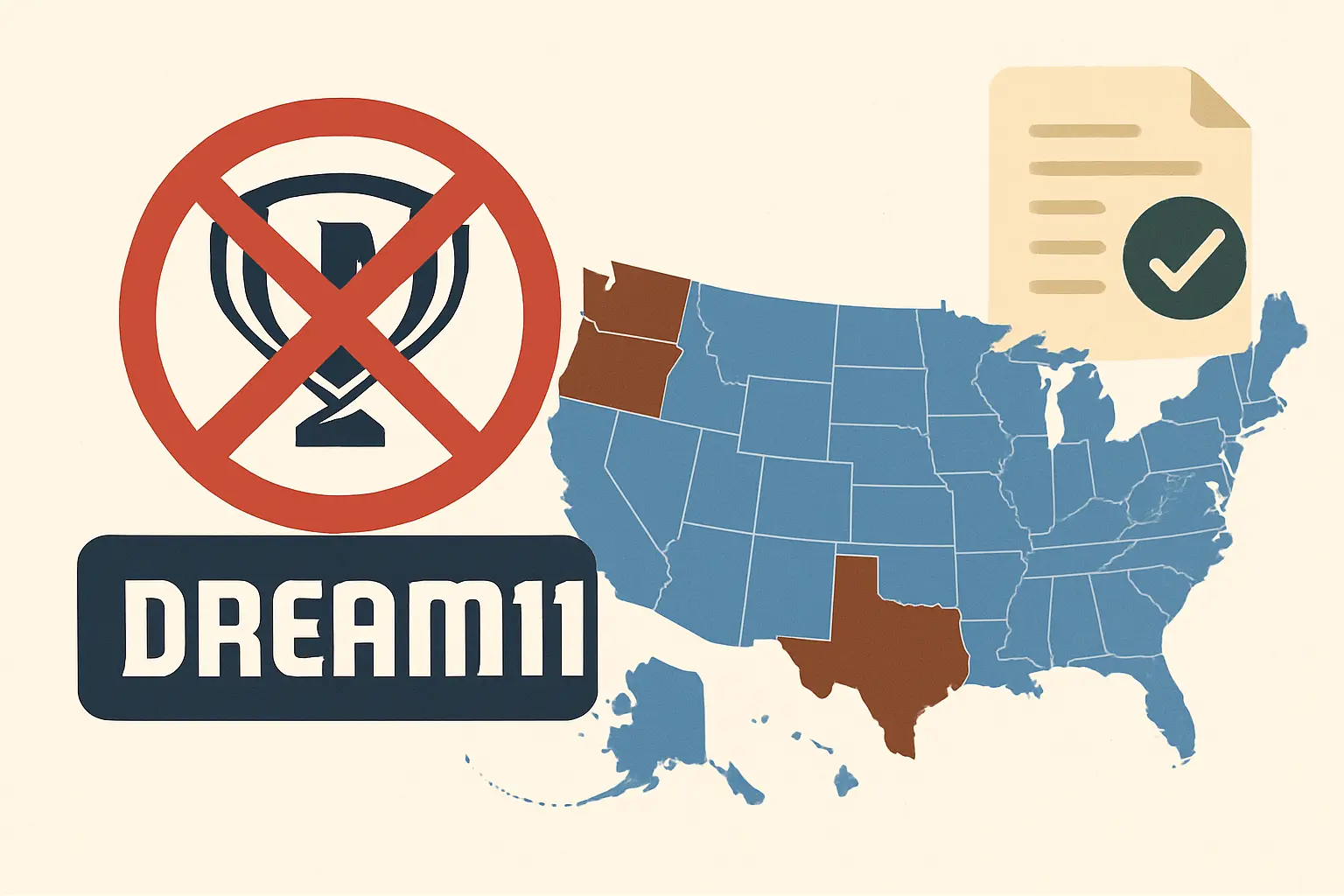
Paid Dream11 contests are restricted in Telangana, Andhra Pradesh, Assam, and Odisha. Dream11 has also limited contests in Nagaland and Sikkim in specific formats because those states follow a licence‑based model. Always verify in the Dream11 app or Help Center before you enter a paid contest, because state rules and platform policies change without fanfare.
A quick word before we dive in. Fantasy sport in India has grown up fast. Lineups get announced late, tosses rewrite roles, pitches misbehave, and a blazing fifty from a lower-order hitter can upend the leaderboard in minutes. But the bigger story is the one outside the boundary rope: a patchwork of state gaming laws, skill-versus-chance jurisprudence, and new compliance rules that shape where and how Dream11 operates. I’ve tracked these shifts from courtrooms to dressing rooms, spoken with compliance teams, and watched how geolocation blocks change the way fans build teams. This guide distils that experience into a clear, no‑nonsense explainer.
What “banned” means on Dream11
The word creates confusion. On Dream11, a “banned state” almost always refers to a location where paid contests are unavailable. That typically involves:
- No entry into paid contests. If your device location is in a restricted state, the “Join” button for paid contests disappears or throws an error.
- Deposits blocked. Adding money is disabled when geolocation detects a restricted state.
- Free practice play. Some free practice contests, leaderboards, and browsing features may remain open.
- Withdrawals possible if KYC is complete. Withdrawing winnings generally remains possible, but you must have successfully completed KYC. If your KYC address is in a restricted state, you may face extra checks or a compliance hold.
This is not a government “ban” on fantasy sports as a concept. It’s Dream11’s compliance response to state laws that either ban real‑money play outright or create licence requirements or legal ambiguity the company chooses to avoid.
Dream11 banned states list and how it changes
Dream11 keeps a live list of restricted states in its Help Center and in‑app messaging. The company updates this quietly when state rules shift or when the product team flips a switch for a particular format. That’s why one friend can enter a league in the afternoon and another can’t by evening after they cross a state border.
As of this update, the states where Dream11 restricts paid contests are:
- Telangana
- Andhra Pradesh
- Assam
- Odisha
Additionally, availability for certain formats may be limited in:
- Nagaland
- Sikkim
The presence of Nagaland and Sikkim in that second bucket stems from a licence‑based regime for online games of skill. Platforms that don’t hold a local licence sometimes choose not to offer paid fantasy there, or they enable only specific formats.
State‑wise status table for Dream11
Use this table as a living map of how Dream11 treats each state and union territory. It is intentionally conservative and written to match what users commonly experience in-app. For final confirmation, check Dream11’s Help Center.
| State/UT | Paid Contests | Free Contests | Deposits | Withdrawals | Legal/Policy Notes |
|---|---|---|---|---|---|
| Andhra Pradesh | Restricted | Often available | Blocked | Allowed if KYC complete | State amendment bans online real‑money play; Dream11 disables paid entry. |
| Arunachal Pradesh | Allowed | Available | Allowed | Allowed | No specific ban on skill gaming for stakes reported. |
| Assam | Restricted | Often available | Blocked | Allowed if KYC complete | Legacy law interpreted to cover money play; Dream11 self‑restricts. |
| Bihar | Allowed | Available | Allowed | Allowed | Skill gaming exception recognized under general law. |
| Chhattisgarh | Allowed | Available | Allowed | Allowed | No state‑specific prohibition targeting skill gaming for stakes publicly enforced. |
| Goa | Allowed | Available | Allowed | Allowed | Casino law irrelevant here; skill gaming generally treated as outside gambling prohibition. |
| Gujarat | Allowed | Available | Allowed | Allowed | Proposals to ban online games surface periodically; Dream11 operates. |
| Haryana | Allowed | Available | Allowed | Allowed | Dream11 cited favourably in skill‑based rulings. |
| Himachal Pradesh | Allowed | Available | Allowed | Allowed | No specific online skill-gaming ban notified. |
| Jharkhand | Allowed | Available | Allowed | Allowed | Dream11 operates. |
| Karnataka | Allowed | Available | Allowed | Allowed | Earlier statewide prohibition on paid online games struck down; Dream11 operates. |
| Kerala | Allowed | Available | Allowed | Allowed | Court quashed rummy ban notification; skill gaming affirmed; Dream11 operates. |
| Madhya Pradesh | Allowed | Available | Allowed | Allowed | Dream11 operates. |
| Maharashtra | Allowed | Available | Allowed | Allowed | Longstanding gambling statute with skill exception; Dream11 operates. |
| Manipur | Allowed | Available | Allowed | Allowed | Dream11 operates. |
| Meghalaya | Allowed | Available | Allowed | Allowed | State introduced a regulatory framework; Dream11 operates. |
| Mizoram | Allowed | Available | Allowed | Allowed | Dream11 operates. |
| Nagaland | Varies by format | Available | Varies | Allowed if KYC complete | Licence‑based regime for online skill games; platforms may limit paid contests. |
| Odisha | Restricted | Often available | Blocked | Allowed if KYC complete | State law historically viewed as not recognizing skill exception; Dream11 self‑restricts. |
| Punjab | Allowed | Available | Allowed | Allowed | Early case law supports skill‑based fantasy; Dream11 operates. |
| Rajasthan | Allowed | Available | Allowed | Allowed | High Court recognized Dream11 fantasy as skill; Dream11 operates. |
| Sikkim | Varies by format | Available | Varies | Allowed if KYC complete | Licence‑based regime; availability can be format‑dependent. |
| Tamil Nadu | Allowed | Available | Allowed | Allowed | Previous ban struck down for skill games; current framework focuses on chance-dominated games; Dream11 operates. |
| Telangana | Restricted | Often available | Blocked | Allowed if KYC complete | State amendment bans online games for stakes; Dream11 disables paid contests. |
| Tripura | Allowed | Available | Allowed | Allowed | Dream11 operates. |
| Uttar Pradesh | Allowed | Available | Allowed | Allowed | Dream11 operates. |
| Uttarakhand | Allowed | Available | Allowed | Allowed | Dream11 operates. |
| West Bengal | Allowed | Available | Allowed | Allowed | Dream11 operates. |
| Andaman & Nicobar Islands | Allowed | Available | Allowed | Allowed | Dream11 operates. |
| Chandigarh | Allowed | Available | Allowed | Allowed | Dream11 operates; early case law background. |
| Dadra & Nagar Haveli and Daman & Diu | Allowed | Available | Allowed | Allowed | Dream11 operates. |
| Delhi | Allowed | Available | Allowed | Allowed | Dream11 operates; taxation and KYC rules apply. |
| Jammu & Kashmir | Allowed | Available | Allowed | Allowed | Dream11 operates. |
| Ladakh | Allowed | Available | Allowed | Allowed | Dream11 operates. |
| Lakshadweep | Allowed | Available | Allowed | Allowed | Dream11 operates. |
| Puducherry | Allowed | Available | Allowed | Allowed | Dream11 operates. |
Paid vs free: why the distinction matters
Free contests are typically treated as entertainment and product engagement. Paid contests trigger state gambling and gaming statutes. Dream11 separates the two to stay compliant and to preserve a fan experience that still lets you track matches, experiment with combinations, and follow player form, even when the law says no to stakes.
Why certain states are restricted on Dream11
The legal map of fantasy sports in India rests on a simple but fiercely litigated idea: games of skill are not gambling. Courts have repeatedly held that when skill predominates over chance, such games fall outside state gambling prohibitions. Dream11’s classic fantasy format—budget‑constrained squad selection, points for performance over a match, need for pre‑match research and scenario modelling—has been recognized in multiple High Courts as skill‑dominant.
Even with that foundation, some states take a different legislative path:
- Telangana and Andhra Pradesh amended their laws to ban online games played for stakes. These amendments are worded broadly enough to capture fantasy sports, regardless of skill, so platforms responded by geoblocking paid contests.
- Assam and Odisha enforce legacy statutes that, as interpreted, leave no clear carve‑out for staking on skill games. The legal ambiguity creates compliance risk, so Dream11 self‑restricts.
- Nagaland and Sikkim introduced licence regimes for online games of skill. If a platform doesn’t hold a local licence or chooses not to operate under those regimes, it may limit paid fantasy contests in those states or only run permitted formats.
In contrast, courts in Punjab and Haryana, Rajasthan, Bombay, and other jurisdictions have described Dream11 fantasy contests as games of skill. The Supreme Court has, in past matters, declined to interfere with those findings at interim stages, which the industry views as tacit support for the skill doctrine. While that jurisprudence helps, it doesn’t override a state law that bans all online real‑money gaming.
How Dream11 enforces state restrictions
The engineering and compliance stack behind a simple “Not available in your state” message is more sophisticated than it looks:
- Geolocation checks. The app uses device GPS, IP address, and signal triangulation to determine where you are when you try to join a paid contest. Even if your account was created in an allowed state, your current location controls.
- Address and KYC. PAN verification and bank account linking confirm identity. Address checks might use document proofs and database validation. If your verified address is in a restricted state, the platform may add extra review layers before releasing withdrawals.
- Payment gateway filters. Deposits are blocked at the gateway level based on location signals. Cash-free creative workarounds don’t help because the join action runs the location check again.
- Responsible play triggers. Apart from legality, Dream11 monitors high‑velocity play, tries to nudge cool‑offs, and conditionally caps deposits where mandated.
What players can and cannot do in restricted states
- Joining paid contests. Not possible. The join action is blocked and entry fees cannot be deducted.
- Depositing money. Not possible. Add‑cash buttons are disabled or refuse to process.
- Viewing and scouting. Allowed. You can browse contests, analyze points systems, and GTCs (guaranteed to close) even while travel locks you out of paid entries.
- Withdrawing existing winnings. Generally allowed if your PAN and bank KYC are complete and there are no policy flags. If your proof of address is in a restricted state, the compliance team may request additional documentation. Withholding happens occasionally when KYC is incomplete.
- Using VPNs or false addresses. Prohibited by Dream11’s Terms. Accounts caught circumventing state restrictions risk permanent suspension and forfeiture. Besides being unlawful, spoofing damages your long‑term account viability, including future KYC and payout rights.
Dream11 legality in India at a glance
In the majority of the country, Dream11 operates as a lawful skill‑based platform. That view is rooted in case law that recognizes the dominant role of knowledge and judgment in fantasy selection—studying player form cycles, pitch behaviour, dew patterns, matchups by pace type, venue strike rates, and role volatility post‑toss. The legal conclusions mirror what seasoned players feel in their gut: fantasy success comes from preparation, not luck.
The tension arises when a state law either erases the skill exception by design or never adopted it in the first place. That’s when platforms retreat. The result is the familiar map: paid contests on in most states, off in a handful.
State‑wise Dream11 legality explained in plain language
Andhra Pradesh and Telangana
- Status on Dream11: Paid contests restricted; deposits blocked; withdrawals possible with complete KYC.
- Why: State amendments explicitly ban online games played for stakes. The wording is broad, and the state enforcement posture is strict. Dream11 builds a geofence around both states and treats them conservatively across all formats.
Assam and Odisha
- Status on Dream11: Paid contests restricted; deposits blocked; withdrawals possible with KYC.
- Why: Older statutes with an expansive view of gambling do not clearly carve out paid skill games. Until courts or legislators clarify, platforms avoid paid entry here.
Nagaland and Sikkim
- Status on Dream11: Availability can depend on format and licensing. Some users see paid fantasy blocked; others find specific contests open.
- Why: State regimes require local licences for online games of skill. If a platform does not operate under that licence, it restricts paid play to stay compliant.
Tamil Nadu
- Status on Dream11: Paid contests allowed.
- Why: The blanket prohibition once notified against online games faced judicial pushback for skill games. The current framework focuses on chance‑dominated games, while fantasy sports platforms operate with the view that their core formats remain skill‑dominant.
Karnataka
- Status on Dream11: Paid contests allowed.
- Why: A state‑wide prohibition on online money games was struck down as it applied to games of skill, restoring the previous status for fantasy sports.
Kerala
- Status on Dream11: Paid contests allowed.
- Why: A rummy‑related notification was quashed; courts reaffirmed that games of skill are outside the sweep of gambling prohibitions. Fantasy sports continues to be treated as skill.
Rajasthan, Punjab, Haryana, Bombay jurisdictions
- Status on Dream11: Paid contests allowed.
- Why: Courts in these regions have explicitly categorized Dream11 fantasy as a game of skill. Those decisions have been cited across the fantasy industry as persuasive authority.
Delhi, Uttar Pradesh, Madhya Pradesh, Bihar, West Bengal, Gujarat, Goa, and most remaining states
- Status on Dream11: Paid contests allowed.
- Why: No state‑specific law targets skill gaming for stakes, and the national patchwork of rulings that favour skill applies. Tax and KYC rules still control the financial side.
How legal rulings describe the skill in Dream11
Judges haven’t been shy about detailing why fantasy sports require skill. Orders that favoured Dream11 described the following features:
- Pre‑match selection under constraints. Managers must create squads before the toss or with limited flexibility post‑toss. The salary cap forces tradeoffs: a premium opener or two mid‑range all‑rounders, a high‑ceiling quick on a spicy deck or a control spinner if the venue slows down.
- Statistical reasoning over multiple parameters. Player form cycles, venue splits, opposition matchups, batting position fluidity, post‑Powerplay bowling usage, late‑over death overs mortality, and the resource cost of chase vs set. These are skill inputs, not chance events.
- Long‑run performance correlation. Experienced fantasy players outperform repeatably over extended slates. That repeatability is a legal hallmark of skill‑dominant activity.
- Limited influence of pure chance. Toss outcomes, freak run‑outs, and weather interruptions are chance factors, but the determinative impact of pre‑match research remains larger on average.
Taxes, TDS, GST, and how compliance actually works
Fantasy sports taxation and compliance changed the texture of gameplay more than many fans realize. The cost of entry, the size of prize pools, and the velocity of withdrawals all connect to a handful of rules.
- GST on online gaming. Platforms pay Goods and Services Tax on online gaming, currently applied on the full face value of deposits or entry amounts as per the prevailing policy. While that tax is the platform’s liability, the knock‑on effect is visible in entry fees and prize pool structures.
- TDS on net winnings. Dream11 deducts tax at source on net winnings under the specific section introduced for online gaming. Net winnings are computed at the platform level—deposits versus withdrawals versus closing balances—and tax is deducted when you withdraw or at the end of the financial period, whichever triggers first. You see this as a line item in your ledger and in the tax certificate within the app.
- PAN, Aadhaar, and KYC. You must furnish PAN to withdraw, and often Aadhaar‑linked checks kick in for identity and address verification. Mismatches or unverifiable addresses in restricted states can delay withdrawals.
- Self‑declaration and record‑keeping. Dream11’s account statement shows contest entries, bonuses, winnings, TDS, and withdrawals. Retain those records for your filings. You cannot offset fantasy losses against other income in the manner some traders do with capital markets; the tax laws ring‑fence treatment of online gaming.
- Bank and UPI hygiene. Name matching between PAN, bank account, and Dream11 profile speeds up payouts and reduces manual reviews. Frequent bank changes can push your payouts into additional verification queues.
Travel and location realities that affect play
India loves road trips during tournaments. Fans who move between states mid‑series experience the geofence directly.
- Moving from allowed to restricted. You can still open the app and scout contests, but the join and deposit actions are disabled instantly. A contest you prepaid while in an allowed state will remain valid; you don’t lose your seat because you travelled.
- Moving from restricted to allowed. Full functionality returns, usually after a brief recheck. Ensure location services are on and that a corporate VPN is not masking your IP; corporate devices often route traffic through remote servers.
- Airport and border quirks. Limitation triggers can occur when devices latch on to tower clusters across state lines. Restarting location services resolves most of these cases. The app relies on multiple signals to avoid false positives, but short‑range border overlap is real in some corridors.
Fantasy skill, seen from the inside
Talk to anyone who consistently finishes near the top of head‑to‑head or small‑field contests and you’ll find a process that reads like a coach’s playbook.
- They build roles, not reputations. A middle‑order batter who anchors in the first ten overs is less valuable in T20 if his strike rate stalls; a Powerplay swing bowler becomes gold on a humid evening when the ball talks. Fantasy scoring mirrors this nuance, and the best managers pivot role expectations with conditions.
- They respect variance without fearing it. A high‑ceiling finisher batting at six is a coin toss on some tracks, but in low‑scoring venues, those late‑over hitters quietly become match winners. The trick is to know when the coin is weighted enough to justify the pick.
- They understand the toss ripple. A left‑arm spinner who bowls most of his overs after the field spreads has a safer floor than a rookie leggie bowling inside the Powerplay. If you’ve tracked how a captain uses his fifth bowler, you’re already ahead.
- They treat price and ownership like levers. Salary is a constraint, ownership is a meta. Picking a massively owned star in fragile conditions can be a trap; fading him when indicators are weak is what creates separation on leaderboards.
Courts noticed exactly this kind of reasoning. That’s why fantasy sports occupy the skill lane in most jurisdictions. And that’s why the legal lines that do restrict Dream11 focus on whether any real‑money game should be allowed at all, regardless of skill.
Practical handling of account and KYC issues in restricted states
Based on user experiences and platform policy patterns:
- KYC with a restricted‑state address sometimes triggers manual review. Have clear scanned copies of PAN and a bank statement with your name and address. If your bank address differs from your current address, add a utility bill or Aadhaar with the current address.
- Withdrawals from a restricted state generally process if KYC is complete. The geofence typically doesn’t block withdrawals. Payment processors and bank holidays can still cause delays; that’s normal banking latency, not a legal block.
- Changing registered address to skirt restrictions is a violation. If you’ve shifted residence legitimately, update KYC with proof. Dream11 rejects edits that don’t pass verification; repeated attempts with conflicting proofs can freeze your account.
- Bonus cash, coupons, and affiliate credits follow the same restrictions. A bonus amount cannot be converted to a paid entry in a restricted state.
How other fantasy platforms handle banned and restricted states
Dream11 is the bellwether. Most mainstream fantasy platforms in India mirror its restricted list with minor variations:
- My11Circle, MPL, and Howzat often geoblock paid contests in Telangana, Andhra Pradesh, Assam, and Odisha.
- Platforms that operate in Nagaland and Sikkim sometimes highlight local licences or restrict formats.
- Small startups adopt the same map to avoid legal exposure. If a platform is offering paid play in a state where everyone else has pulled back, treat it as a red flag and look for clear, verifiable licence disclosures.
Responsible play in a regulated environment
Legal compliance is one half of the story; the other half is personal responsibility.
- Budget discipline beats hot streaks. Decide your daily exposure before the toss. The better you are, the more you realize variance is not a verdict on your skill; it’s the cost of playing a high‑skill game with probabilistic outcomes.
- Contest selection matters. Head‑to‑heads and small‑field leagues reward precision; mega‑contests require calculated differentiation and patience. The law doesn’t decide your risk; you do.
- Respect platform rules. Don’t open multiple accounts, don’t share credentials, and don’t collude in head‑to‑heads. Integrity keeps the ecosystem healthy and keeps courts comfortable with the skill designation.
State‑wise mini‑notes for power users
These notes condense the lived experience of fantasy players across the country and the posture of Dream11’s compliance team.
- Telangana, Andhra Pradesh. Nothing slips through. Paid entries remain blocked regardless of match importance, event scale, or tournament location. Keep your lineup research muscle fresh with free practice when travelling there.
- Assam, Odisha. Expect the same level of restriction. If you relocate permanently from these states to an allowed state, update KYC with current proofs before planning withdrawals or higher‑stakes play.
- Nagaland, Sikkim. If you see paid contests one day and not the next, it’s usually a format toggle rather than a platform bug. Read the format descriptions within the app; some skill categories operate under different policy logic in licence states.
- Karnataka, Tamil Nadu, Kerala. Operate normally. Earlier turbulence has settled into a stable pattern for skill games; still, follow app notices because state notifications evolve.
- Delhi, Mumbai, Pune, Kolkata, Jaipur, Lucknow, Ahmedabad, Hyderabad city limits in restricted states. City limits don’t override state law. Hyderabad and other cities in Telangana remain restricted, even though cricketing infrastructure there is world‑class.
The compliance rationale in one paragraph
India’s constitutional design grants states the power to legislate on betting and gambling. Courts crafted a skill exception over decades, and fantasy sports sit comfortably in that lane in most jurisdictions. But when states legislate to ban all online games for stakes, or preserve older laws without skill carve‑outs, platforms have to respect that boundary. Dream11’s geofence is a product of that balance: national‑level judicial comfort with skill gaming on one hand, and state‑level prohibitions or licence frameworks on the other.
A short legal timeline without the legalese
- Skill doctrine established. Classic rulings held that games where skill predominates over chance fall outside gambling bans. That doctrine supports fantasy sports.
- Dream11 rulings across High Courts. Multiple courts analysed Dream11’s contest mechanics and recognized them as skill‑dominant experiences.
- State pushback through legislation. States such as Telangana and Andhra Pradesh adopted prohibitions on online real‑money play, leading platforms to geoblock.
- Licence states emerge. Nagaland and Sikkim framed regimes to allow online skill games under local licences, prompting format‑level restrictions for platforms that didn’t participate.
- Wider regulatory and tax net. GST and TDS rules for online gaming defined how money moves, how it’s taxed, and what platforms must verify.
Common myths that confuse players
- “Fantasy sports are gambling everywhere.” False. Multiple courts have ruled the other way for Dream11‑style games. Restrictions exist not because fantasy equals gambling, but because some states ban any real‑money online play.
- “VPNs make it fine.” False. VPNs breach platform Terms, invite account forfeiture, and don’t guarantee a bypass. Payment rails and KYC checks unravel such workarounds quickly.
- “Free contests mean everything is legal.” Not quite. Free play avoids the staking trigger, but platforms still apply location checks for some product features and promotions.
- “Tax doesn’t apply to small winnings.” False. TDS on net winnings applies as per current rules and thresholds set for online gaming. Platform‑level computation and auto‑deduction mean you can’t ignore tax.
How to read Dream11’s Help Center the right way
When you open the Help Center:
- Look for “Restricted States” or “Where can I play” articles. Dream11 maintains a simple list with a short note on withdrawals and free contests.
- Scan the fine print. Some entries include phrases like “selected formats” or “licence states.” That hints at Nagaland/Sikkim behaviour.
- Check the date stamp. The articles often carry a last‑updated timestamp. If you’re playing during a festival or marquee series, recheck—edits sometimes land just before big tournaments.
Editorial stance and disclosure
This guide is informational and reflects the legal landscape and platform behaviour as observed and reported by users, lawyers, and product teams. It is not legal advice. Laws change, court orders get stayed or modified, and platforms adjust their switches without press releases. Always treat the Dream11 app and its Help Center as the definitive, real‑time source for whether paid contests are available in your state today.
A compact glossary for everyday use
- Game of skill.
- A game where skill predominates over chance in determining outcomes over the long run.
- Geofence.
- A location‑based control that enables or disables app features based on where you are.
- Licence state.
- A state that requires platforms to hold a local licence for online games of skill.
- Net winnings.
- The platform‑level calculation of your gains after accounting for deposits, withdrawals, and closing balances, used to compute TDS.
- KYC.
- Know Your Customer verification via PAN, bank, and address proofs.
Dream11 banned states list as a simple text reference
- Restricted: Telangana, Andhra Pradesh, Assam, Odisha.
- Format‑dependent or licence‑sensitive: Nagaland, Sikkim.
- Allowed: All other Indian states and union territories, subject to normal KYC, TDS, and GST compliance.
What to watch in the policy space
- State‑level amendments. A single notification can flip availability overnight. The pattern is cyclical: after high‑profile incidents involving other games, states revisit online gaming.
- National tax refinements. TDS procedural tweaks or clarifications on net winnings can change how and when deductions appear in your wallet.
- Industry self‑regulation. Codes of conduct, player protection tools, and transparency reports influence judicial comfort with the skill designation.
Why this matters beyond legality
Fantasy sports are part of cricket’s modern storytelling. The act of choosing a punt bowler at Dharamshala when the air turns heavy, of skipping a superstar on a sluggish Chepauk surface, of backing a domestic breakout when he’s handed the new ball—these are decisions rooted in the heartbeat of the sport. Clarity on where and how you can legally make those calls protects that culture of informed fandom. It gives room for skill to breathe, within the lines drawn by the law.
Sources and further reading
- Dream11 Help Center — Restricted States and Playability Policy.
- Telangana and Andhra Pradesh gaming law amendments text and official notifications.
- Assam Game and Betting Act and Odisha Prevention of Gambling Act texts as commonly cited in industry compliance notes.
- Nagaland Prohibition of Gambling and Promotion of Online Games of Skill Act and rules.
- Sikkim online gaming regulatory framework.
- High Court rulings classifying Dream11 fantasy contests as games of skill across multiple jurisdictions.
- Government notifications and FAQs on GST for online gaming and TDS on net winnings.
Update policy and changelog
- December 5: Refreshed state‑wise table, tightened notes on licence states, added tax section clarity on net winnings and KYC edge cases.
- Earlier updates: Streamlined the snapshot, added withdrawal guidance for restricted states, and expanded Karnataka/Tamil Nadu legality notes.
Final word
Legal clarity shouldn’t be a guessing game, and neither should fantasy sport. Dream11 banned states exist because a few state laws either don’t recognise the skill carve‑out or bar online money play altogether. Everywhere else, the game is on—and it rewards patience, pattern reading, and a love for the craft. Check the Help Center before you enter, respect geofences, play within your means, and keep chasing that perfect XI.