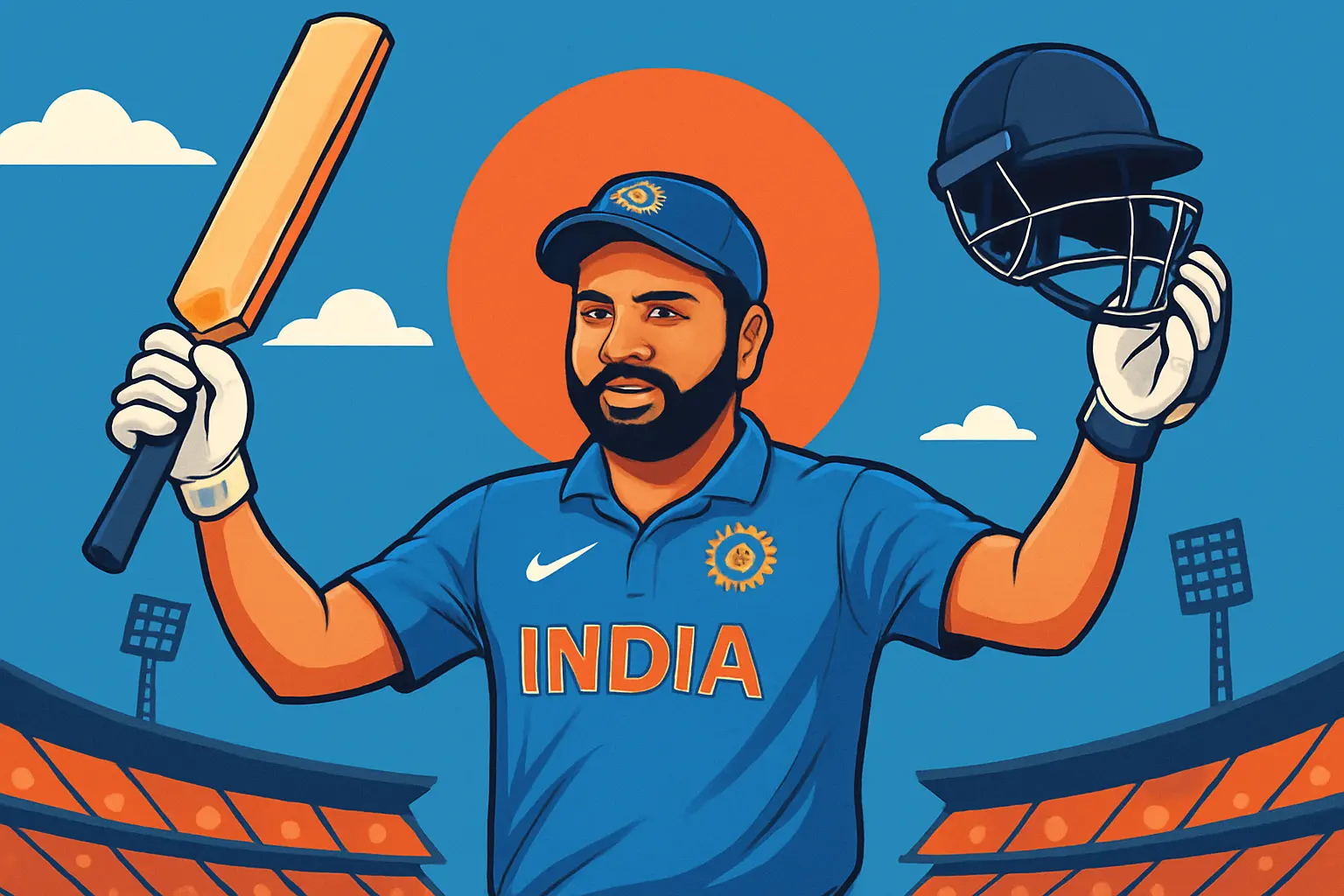


Standing on the cut strip with the field still waking, sweat rolling off the lacquered seam, you feel the role before you understand it. Opening batters don’t just begin an innings; they write its script.
Opening batters manage risk when the ball is at its most alive, build trust with a partner when the crowd is at its most impatient, and decide—minute by minute—how much of themselves to spend today. The best opener in the world is not a headline or a highlight reel. It’s a technician with ferocity under the surface, a scorer who survives, a survivor who scores.
I’ve watched, faced, and coached a lot of new balls. Different continents, different balls, different moods. There’s a pattern to greatness at the top of the order, but it never looks identical. One opener leaves twenty balls outside off and walks out with quiet dignity. Another cleaves through extra cover twice before the slips have warmed up. Both count. Both can be best in their world if they’re solving the problem in front of them better than anyone else.
What Makes a World-Class Cricket Opener
Technique is the entry fee, not the crown. The best opening batter marries clean mechanics with situation-specific decision making. Here is the matrix that gets repeatedly tested, over and over, every time a new ball is handed over.
- Setup and alignment. Neutral head over off stump, shoulder line matching expected movement, backlift path slightly tucked to shorten the arc. The world’s best rarely reveal the bat’s face too early.
- Trigger movement. Small and purposeful. A gentle press or back-and-across to cover the inside edge. Big triggers look pretty on slow-motion social clips; they unravel under two-way movement.
- The leave. There is no survival without a leave. Best-in-class openers show the ball an off stump that keeps changing—some days sixth stump is playable, other days fourth stump is a no-go zone. That judgment is their art.
- Contact points. Under the eyes in early overs, out front when the ball is old. The best pin their early drives to a late contact so the bat face stays square longer.
- Scoring blueprint. The best opener in the world knows how to score during every phase:
- Tests: risk-thin early scoring (glances, third-man nudges, the controlled punch), then expansions through the covers and the drop-kick sweep once the ball softens.
- ODIs: find twos to long square boundaries, take midwicket singles off hard lengths, then explode in controlled bursts when the fifth and sixth bowlers arrive.
- T20Is: impose with intent in the powerplay, hunt matchups, and protect the partner’s strength—sometimes you eat the dots to expose the spinner to your partner’s preferred arc.
- Mental operating system. Patience that doesn’t go stale, bravery that doesn’t get reckless. The world’s best openers manage time better than anyone else in their team.
- Conditions intelligence. Dukes in the mist asks for a different grip pressure than a Kookaburra under heat. SG on a crusted surface demands a different backlift and a tighter pad line. The best opener notices a fresh scuff on one side of the ball and reads shape a ball earlier than the rest.
- Partnership craft. Watch the best: a small nod after a leave, a short word between overs that sets a trap for mid-on. Great opening is a duet played with the bowler listening in.
What Separates the Absolute Best: The Data That Matters
The scoreboard doesn’t record what a leave saves or how a shoulder line shields a nick. But impact can be approximated. When I build my ratings, I grade openers against five anchors.
- First-20 stability: average and balls-per-dismissal against the new ball (Test) or in the powerplay (ODI/T20I).
- Acceleration curve: strike rate growth after the first spell, without spiking dismissal rate.
- Away adaptability: average and boundary percentage in seam-friendly or spin-rough environments.
- Conversion power: fifties to hundreds (Tests/ODIs), powerplay to death efficiency (T20Is).
- Partnership value: stand length with multiple partners, not just one soulmate.
Benchmarks that flag true elite vary by format. You don’t need to carry a calculator into the dressing room to get the picture, but the picture helps.
| Metric | Tests | ODIs | T20Is |
|---|---|---|---|
| First-20 balls survival | Strongly above team norm | High balls faced in powerplay, dismissal rate below team’s top-order mean | Dot-ball rate managed without sacrificing intent |
| Powerplay strike rate | Not a priority, but controlled scoring | Aggressive without excessive risk; boundary + 2s mix | Positive intent; boundary every couple of overs |
| Conversion/acceleration | Fifties that become hundreds regularly | Hundreds produced when set; controlled late overs | Strong finish rate; can switch gears post powerplay |
| Away adaptability | Solid average in swing/seam and on turning surfaces | Minimal drop-off versus home | Matchup fluency across pace/leg-spin/left-arm |
| Partnership value | Consistent century stands with multiple partners | High opening stand average under varied conditions | Synergy metrics—complementary roles, strike rotation |
How I Rate the Best Opener in the World
Pick the wrong lens, and you crown the wrong batter. Averages alone flatter the flat-track bully. Strike rate alone rewards fireworks that burn out in the second over. Put it all together.
- Weighting for Tests: survival under high skill (35%), away record (25%), conversion (20%), acceleration without chaos (10%), partnership value (10%).
- Weighting for ODIs: powerplay management (30%), conversion and big-hundred frequency (25%), away adaptability (20%), finishing or deep-overs value (15%), partnership value (10%).
- Weighting for T20Is: powerplay impact (40%), matchup play and role clarity (25%), finishing rate/acceleration (20%), adaptability across conditions (10%), partnership synergy (5%).
Those aren’t theoretical. They come from seasons of scouting notes, tracking batters across venues, and watching what wins layered series and high-pressure tournaments.
Best Test Openers of All Time: The Quintessence of New-Ball Skill
Tests set the gold standard for the opening craft. The ball is hardest, the fields most hostile, the patience asked monstrous. Who sits up there with the gods?
- Jack Hobbs. The original architect. Moves as if his eyes are ahead of the ball. Compact, subtle, punishing when set. A silhouette that still teaches.
- Len Hutton. Metal-boned discipline. Soft hands that disguised the edge. Hutton’s game was a workshop in restraint and delayed offense.
- Sunil Gavaskar. If the best opener in the world were defined by how consistently a new ball is bullied into boredom, Gavaskar is permanently in that conversation. Neat deflections, a leave with moral authority, and a cover drive that waited its turn.
- Matthew Hayden. Cold-blooded imposition. Stood outside leg, took the channel away, dared length to be perfect. Used the pick-up pull as a declaration of intent. Redefined how an opener could dictate to the quicks in the first session.
- Virender Sehwag. An opening batter as an ideology. The data looks like sacrilege until you look at the field he was hitting into. He fractured length; bowlers aimed fuller to avoid the cut and got driven, dragged short to avoid the drive and got cut. The strike rate was not a choice; it was a thesis.
- Graeme Smith. Captaincy aura thick as oak, heavy bat, minimal fuss. He nullified angle with angle, owning the on-side, ignoring sledges like they were weather. His ledger against high-class pace away from home proves more than any speech about bravery.
- Alastair Cook. Smaller backlift, bigger sums. He wore bowlers down until they had nowhere to bowl. The best opener is often a metronome with a will of steel; Cook defined that for a generation.
- David Warner. Violence with method. A white-ball invader who carried enough red-ball technique to live with the seam. At home a storm, away a chess problem he learned to solve often enough to hurt.
- Gordon Greenidge. Balance that looked preordained. Hands soft but ready to hammer. He could ride bounce better than most and turned good balls into working singles.
- Geoff Boycott. He’ll tell you he belongs here, and he’s not wrong. For those who think strike rate is everything, Boycott’s highlight reel is a masterclass in match control.
Current torchbearers earn their place differently: a little more back-foot scoring on slow pitches, a little more caution away, a little more white-ball muscle memory creeping in—used smartly, not impulsively. When I scout the present crop, I look for a few markers: evidence of leaving without flinch, the inch-perfect on-drive once set, and footwork that doesn’t panic in the corridor. Names that often rise in that conversation include Rohit Sharma for his late-career mastery against quality spin and seam, Usman Khawaja for geometric patience, Dimuth Karunaratne for stubborn run-making in difficult surfaces, and Tom Latham for orthodox solidity under cloud. If “best opener in the world” today means who I’d want walking out for my life in testing conditions, that short list is practical and unromantic.
Best ODI Openers: Tempo Masters and Hundred-Makers
The job description for the ODI opener used to fit inside a sentence: play out the new ball and collect through the middle. Then field restrictions sharpened, white balls changed texture, and the bowling playbook evolved. The modern ODI opener embodies contradiction: attack without collapse, conserve without stagnation.
Pillars of the role:
- Secure the first fifteen without relinquishing initiative. Fifty for none sets the table; fifty for one with intent keeps pressure honest.
- Own the matchup cycle. Fast start against a third seamer, neutralize the off-spinner turning away, lap the left-arm around the corner when fine leg is up.
- Build marathon hundreds. Big totals and chases demand hundreds from the top. The best ODI opener doesn’t settle at seventy.
The pantheon is rich.
- Sachin Tendulkar. Once he found permanent daylight at the top, the game’s rhythmic center shifted. Built innings with stovetop patience, then ignited. Picked length early, which made him dangerous on any strip. Hundreds piled like furniture in a house that kept getting extensions.
- Saeed Anwar. Left-hander’s flow, strong wrists, elegance masking brutality. A lofted drive over extra that lived in bowlers’ nightmares, and that late cut chiselled from marble.
- Sanath Jayasuriya. A regime change in the powerplay. He turned the white ball into a skittish animal, forcing captains to abandon early attacking fields. His effect exceeded his averages because he altered defensive thinking permanently.
- Adam Gilchrist. Sledgehammer disguised as a smile. He could turn a global final into a personal fast-forward montage, but the core was still opener’s sense: choose the ball, choose the over, choose the matchup.
- Hashim Amla. The watchmaker. He bled you with twos and slid to a hundred while nobody noticed. Pace, timing, placement—he made ODI opening look like ballet with a metronome.
- Rohit Sharma. On flat or fair, against swing or seam, he ramped the definition of a “big” hundred. That extra half-second at the crease turns length into an accessory. When he’s in, fields die a slow death. If the question is best ODI opener in the world across recent cycles, he sits at the top of many notebooks.
- Chris Gayle. In ODIs, more selective than his T20 persona suggests, but when he opened the shoulders, square leg moved back on instinct. Power with a veteran’s sense of when to throttle up.
- Quinton de Kock. Hands as clean as freshly planed wood. Off-side dominance, sweeps with nonchalance, keeping that barely interrupts rhythm. ODI opening as a dance where the drummer and the dancer are the same person.
- Shikhar Dhawan. The tournament man. When the stage widened and the group tables tightened, he found runs. Wristy, bright through point, an understanding with partners that turned ones into quick twos.
| Opener | Hallmark ODI Traits |
|---|---|
| Sachin Tendulkar | All-phase control, late acceleration, complete shot range |
| Saeed Anwar | Whippy wrists, extra-cover loft, pace neutralizer |
| Sanath Jayasuriya | Powerplay disruptor, horizontal bat bullying, fearless length hitting |
| Adam Gilchrist | Early imposition, spin-smashing countermeasure, big-game temperament |
| Hashim Amla | Risk-light accumulation, symmetrical wagon wheel, conversion calm |
| Rohit Sharma | Monumental hundreds, extra beat of time, range against pace and spin |
| Quinton de Kock | Off-side fluency, timing over force, lefty angle exploitation |
| Shikhar Dhawan | Tournament reliability, left-right partnerships, touch play |
Best T20I Openers: Powerplay Bosses and Matchup Magicians
T20 made the opener’s window narrow and blinding. There’s almost no warm-up stretch. Bowlers swing hard for four overs. Fields are stingy in the deep. And yet patience matters because the team often can’t afford two wickets inside two overs. The best T20I opener must compress the entire craft into a dozen balls: intent visible on delivery one, dismissal risk consciously managed, boundary hitting high-caliber, and rotation instinctive.
Primary demands:
- Powerplay strike rate without catastrophic dismissals. It isn’t “hit everything”; it’s “hit the right ball, right spot, right over.”
- Boundary-to-dot ratio. If you go three dots, the fourth ball must pay rent.
- Matchups, matchups, matchups. Strong leg-spin hitter? Eat one extra ball against left-arm angle to keep the leggie on strike for your partner. Struggle versus high pace at the ribs? Pre-meditate room or paddle to neutralize the length.
- Post-powerplay transition. Many good T20 openers lose momentum when shields go up. The best keep scoring by hitting gaps, then re-accel late.
Who owns this format at the top?
- Jos Buttler. All gears accessible. Reverse options ready, power through the V, baseball shoulders with cricket instincts. When he’s reading it, there’s a sense of inevitability in the chase chart.
- Babar Azam. The geometry of risk. Doesn’t need a skyscraper strike rate at ball one; finishes many more innings than his peers while striking when it hurts most. Classic through cover, deft late cuts when third is up, and mid-innings control that keeps collapses far away.
- Rohit Sharma. Intent turned up, especially when protection is thin. He reads fields like a poker player reads faces. The pick-up flick and short-arm pull make any length on the hip a bad idea.
- Quinton de Kock. Value from his fearless cuts and the ability to hit the same good length ball to either side of the wicket based on angle. His T20I opening rhythm is both graceful and ruthless.
- Aaron Finch. Architect of the big over. Not the fastest starter always, but exquisite at choosing the five-ball phase for the knockout—and then he lands all five.
- Martin Guptill. Long levers, sound hitting base, and an ability to detonate in multi-boundary overs against pace.
- Mohammad Rizwan. Efficiency over flash. Elite strike rotation, a calendar of sweep options, and chemistry with partners that makes boundary bursts more valuable.
| Archetype | Strength Zones | Matchup Preference |
|---|---|---|
| Power accumulator (Buttler type) | V, square leg, reverse over point | Targets spin/pace equally; thrives on matchup switches |
| Classical controller (Babar type) | Cover-to-midwicket lanes | Spins down risk early, cashes in once pace returns |
| Explosive launcher (Rohit type) | Pull/flick, lofted straight | Attacks pace upfront, sweeps leg-spin if lengths drift |
| Dynamic lefty (de Kock type) | Point-to-cover slices, square drives | Punishes width, uses pace; keeps strike turning mid-overs |
The Best Opener in the World: A Cross-Format Verdict
Picking one name is tricky because each format rewards different genius. But if “best opener in the world” means: who brings elite value at the top across the red ball and both white-ball formats, who sets tone, who shapes tournaments and series, who forces captains to move fielders they wanted to keep still—the composite crown sits on a modern technician-slasher hybrid with supreme reading of length.
Across the current crop, one contender consistently touches all three peaks: Rohit Sharma. The logic:
- Tests: matured judgment outside off, violent control once set, quality against spin at home and composure against seam away. Not a numbers-only story; it’s the calmness he brings to mornings that could become disasters for others.
- ODIs: the high-ceiling hundreds define matches. There’s a reason teams fear him not just getting in, but staying in. His ability to stretch a good day into a match-deciding epic is rare.
- T20Is: intent combined with a veteran’s memory of bowlers. He won’t always top the powerplay charts, but he bends fields and lets partners thrive.
An alternative cross-format case can be made for Jos Buttler’s T20I and ODI violence paired with enough red-ball experience in first-class volumes to show method, or for David Warner’s historic peak influence, or for Babar Azam’s extraordinary white-ball control plus red-ball substance. But on the balanced scorecard right now, Rohit’s weights on both sides of the cricketing coin nudge him ahead.
If the crown must be split by format:
- Tests: Sunil Gavaskar still frames the archetype of the best Test opener in the world, with Hobbs and Hayden absolutely shoulder-to-shoulder depending on the lens.
- ODIs: Sachin Tendulkar sits head of the table on body of work and multi-phase control, with Rohit Sharma the most destructive long-form ODI opener of the modern landscape.
- T20Is: Jos Buttler represents the modern ideal—multi-arc hitting, smart tempo, and endgame authority—though calls for Babar Azam’s control-first consistency are entirely defensible depending on team construction.
Partnerships: The Other Half of “Best”
Openers are halves of an equation. Synergy matters: right-left combinations, tempo pairing, ego control. Some pairs deserve their own chapters.
- Greenidge and Haynes. West Indian royalty. One hammered, one chiseled; roles swapped when needed. Their trust allowed both to play in their truest voice.
- Hayden and Langer. Technique debates rage, but together they dictated first sessions around the world. Langer’s jagged fussiness kept him honest; Hayden’s menace kept everyone else honest.
- Sehwag and Gambhir. India’s right-left thunder. One bent time, the other stretched length. Too many bowling units came in with plans and left with prayers.
- Gilchrist and Hayden (ODIs). An opening act that set tournament tempos. Early overs felt like daylight robbery if you bowled without perfect plan and perfect execution.
- Rohit and Dhawan (ODIs). Very few modern pairs could bank so many safe powerplays without sacrificing the middle overs’ potential. Compliments in motion.
- Babar and Rizwan (T20Is). Their understanding of when to steal twos, when to squeeze, when to explode is relational batting at its best.
Notice the pattern: synergy isn’t duplicated skill; it’s compatible skill.
New-Ball Survival vs Dominance: The Hinges of an Innings
Coaches obsess over the first thirty balls of an innings in Tests and the first twenty in white-ball cricket, and with good reason. That’s where matches tilt quickly. Here’s what we look at when coding those overs.
- Dot-ball tolerance. Some openers carry a dot-heavy start because they cash at a higher rate when they swing. Others need to manage dots early because their acceleration gear arrives later. The trick is understanding your own innings arc.
- Bowler psychology. Opening bowlers hunt with patterns—two away, one in; hard length then sucker ball full. The best opener holds nerve on the bait ball. Team analysts will flag these sequences, but the batter’s eyes must confirm.
- Field pressure. If mid-off is up and you’re seeing it well, one calculated loft can flip the entire ring dynamic. Not every opener should play it, but the ones who can must time it like a surgeon.
- Kookaburra, Dukes, SG truths. Ball behavior isn’t trivia; it’s tempo. Dukes shapes longer and later in temperate air; leave more, bat closer to the body. Kookaburra feels innocent for an over then suddenly becomes mischievous under skillful wrists. SG can seam longer on abrasive decks; batters who delay hands and soften grip buy lives.
| Ball | Early Behavior | Opener’s Adjustment |
|---|---|---|
| Dukes | Prolonged shape, later swing | Leave wider; play under the eyes; narrow gap between bat and pad |
| Kookaburra | Early hint, quick settle, then occasional nibble | Score when it’s sleepy; watch for the wobble seam return spell |
| SG | Seam grip, persistent seam on abrasive surfaces | Soft hands, play as late as possible; respect the in-ducker on middle |
Tactical Blueprints: How Elite Openers Build an Innings
The best opener doesn’t pick shots; they pick patterns. A few frameworks I teach and see in elite practice:
- The Rule of Three Leaves. Commit to three leaves outside off early to calm the brain. This builds rhythm and resists false drives on fourth or fifth stump.
- The 2-4-6 Map. In ODIs, target an over every two overs for rotation (2), an over every four overs for a boundary (4), and a power over around every six where you change the innings physics (6). It doesn’t always land perfectly, but it guides intent.
- The Shoulder Shield. Against the ball that seams in, set your front shoulder slightly more closed and bring the bat down inside the line. It turns an LBW into a thick inside edge far more often than it turns a drive into a nick.
- Vacuum Singles. In T20Is, call singles into the “vacuum”—the space just wide of the bowler on a defensive field or behind square on a deep set. Those quiet ones feed the boundary balls.
- The Patience Trap for Bowlers. A silent five overs disarms many quicks. They need feedback. When you give them none, they often go fuller or shorter to chase it. The best opener in the world knows this and waits for the mistake like a cat under a table.
Case Files: How Great Openers Solve Specific Problems
- Against the two-way moving ball. The elite wait to show the bat’s face. Watch a master: backlift is compact, the blade remains closely aligned, and the first scoring shot is often a closed-face push through mid-on rather than the airy drive. When the ball wobbles both ways, boundary hunger is delayed and points are scored by judgment.
- On a baking subcontinental strip against high-class spin. The opener with a sweep catalog runs the game. Conventional, slog, paddle, and the hard sweep in between—spinners lose their course when sweeps threaten every length. Add the skip-and-smother to convert any decent length into a half-volley.
- Under lights with a slightly damp outfield. The ball skids, swing sharpens on seam-friendly surfaces. The opener reduces trigger movement to avoid being caught on the crease and plays straighter, delaying the big shot until the field spreads. Singles to long-on and long-off turn pulse back down.
- In a T20 chase where the target is par but the start is slow. The best don’t panic-swing in the fourth over just because ten balls went quiet. They target the fifth bowler or the weaker matchup over in overs seven to nine, knowing one twelve-run over repairs everything.
Building and Managing an Opening Partnership
Communication isn’t just loud calls. It’s pre-agreed triggers—what shot means we rotate next ball, what hand signal suggests a bowler is telegraphing the slower ball, what glance says we attack the next over. The great pairs also manage each other’s egos. The better starter that day takes the lead; the other partner protects him.
Principles that keep partnerships blooming:
- Clarity of roles at toss time. Who absorbs the angle from the left-armer over the wicket, who handles the leg-spinner first over, who preps to counter bumpers.
- Unknown-ball plan. If shape is a mystery, both batters start one stump tighter and look for deflections to release pressure.
- Two-over reviews. After every second over, align: Are we bound by their plan, or are we dragging them to ours?
Training Like a Best-in-Class Opener
Being that good isn’t born; it’s built. The top tier train like the job demands.
- Leave drill with wobble seam. Throwdowns that begin a foot outside off and finish straighter, with the batter committing to shoulders pointing down the line. Score zero. Success is a still head and a late bat pickup.
- Two-pace machine. Alternate bumper and full, with the batter freezing the head position and setting contact points. Goal: eliminate panic feet.
- Spin-sweep matrix. Off rough, on mat, with cones for sweep landing. Work patterns: two conventional sweeps for every one reverse, then repeat with field shifts.
- Vision and breath. Saccade exercises before batting, then breath anchoring between balls. The best opener in the world doesn’t let adrenaline pick shots; breath does.
- Decision-speed games. Coach calls “leave” or “play” as the ball leaves the hand from ten yards. Batter commits on the shout, exaggerating trust in the call. It wires the brain to commit after the last possible frame.
Common Misconceptions About Opening
- “Strike rate defines value.” Context defines value. A seventy-strike-rate session that blunts a supreme new-ball attack can be of more value than a ninety-strike-rate cameo into a collapse.
- “Left-right is always best.” It often is, but not always. Two right-handers with inverted strengths can break bowlers more ruthlessly than a forced left-right mix with poor chemistry.
- “White-ball openers should swing at everything early.” Teams lose more games with two wickets in the first three overs than they win with thirty in the first three. Directed aggression beats general aggression.
- “Great openers look busy.” Some of the greatest look almost slow. Their real action is underground: reads, leaves, little chord changes that shift bowlers into error.
Pressure, Poise, and the Hundred That Matters
Centuries are currency—but not all notes are equal. Skilled assessors care about where the hundred begins. The best opener often earns a mid-innings fifty that compacts a chase or keeps a first-innings total honest. Many great hundreds are ugly for the first forty runs and then gorgeous after lunch. The scorecard doesn’t show the context: the over from the quick who had the ball hissing, the mouse-trap field on a two-paced deck, the inside edge that needed soft hands to avoid tragedy. The analyst’s eye sees it. So does every teammate who has ever put pads on after this opener.
Why “Away” Is a Separate Exam
There’s a reason away numbers hold heavier weight in my model. The best opener in the world carries their method in a suitcase. Different humidity, different footmarks, different shine-retention on the ball, different slip angles. It tests the exportability of skill. It’s not enough to park a lorry of runs at home; the stamp of class has customs stamps all over it.
Segmenting the “Best” by Match Situation
Another frontier of analysis that matters goes beyond formats: situation.
- Best with a soft new ball and flat deck. This player must not leave runs on the table. They should terrorize third seamer spells and ensure the game is built on a foundation too solid to collapse.
- Best when the ball is spitting and nibbling. This player must own the leave, own the inside edge, drain the attack’s morale.
- Best in chases. Keep a head start on the rate, snuff collapses, transport the innings calmly through turbulence.
Different openers wear these crowns differently. The rarest are like Swiss Army knives—they can open three envelopes with the same blade.
Cultural and Tactical Shifts Shaping the Future Opener
T20 leagues alter brain chemistry. Openers now arrive with range and bravery baked in. The art will be channeling that aggression without throwing away new-ball sanity in Tests and ODIs. Two trends to watch:
- Matchup literacy as a habit. Younger openers already think in terms of “leggie away from me with long-on up equals sweep-table time.” That language will get richer.
- AI scouting and bowler pattern prediction. The best openers use data to warm their instincts, not replace them. Pre-series codexes that predict spells—length clusters, seam usage by ball age—will keep climbing in quality. The best opener in the world will turn those packets into one or two timely anticipations per innings.
Fieldcraft: Reading Captains and Breaking Plans
Openers who manipulate fields are puppeteers. You can force a change without hitting a boundary.
- Rehearsed pushes. Two precise pushes past point at low risk compel cover to flatten, opening mid-off. The very next over, the opener walks into a safe chip over mid-off for four.
- Delayed drive. Resist the early cover drive. Let the captain taste restraint. He brings cover a step tighter; then you pick his pocket two overs later.
- Drop-and-run economy. Nothing scrambles a ring like spotless singles. If you can harvest five in an over without risk, midwicket will migrate; that’s when you earn your boundary.
Why the Best Openers Make Better Teams
Lay a sheet over scorecards from winning streaks, and you’ll find a pattern: openers keeping the slip cordon working longer than they like, fielders spending more time chasing leather than they budgeted, bowling changes made earlier than planned. A team with a world-class opener starts games on its own timetable. It gets to bring first drop in against a slightly older ball. It allows the middle order to choose violence more often. It gives captains space to use bowlers creatively.
Stories From the Trenches: Three Opening Essays Without Dates
- The green top in a southern city. Two right-arm quicks looked like storm gods. The opener took eight leaves in the first twenty balls and moved a bit leg-side to take the away-shape out of the equation. He scored his first boundary through mid-on, not through cover. Bowlers got impatient, went full, and he clipped three on the trot. The entire session tipped because he refused the pretty drive for half an hour.
- The global tournament morning where the ball felt like a bar of soap. The opener absorbed a bouncer plan, never hooking into the trap. When fine leg moved square, he lifted over that fielder just once. The captain retreated; singles returned; the partner bloomed.
- The night chase against double leg-spin on a tacky pitch. The opener pre-mapped the sweep catalogue, took a conventional sweep early to push the midwicket back, then reversed the next over to push point out. Suddenly two deep on both sides meant the bowler had to dart; he missed once, and the opener launched over long-on. That sequence won the game long before the last over.
Choosing the Crown With Honesty
Awards and superlatives can feel like sportswriting candy. But the “best opener in the world” should be argued like a hard-earned thesis, not a playlist of greatest hits. The case must include what formats ask of the role, how batters answered those questions under different skies, and whether they made partners and teams better.
If you force me to place the modern crown on one head across formats, I hand it to Rohit Sharma for the unique blend of serenity and brutality across red and white balls, for the hundred-making habit in ODIs, for the T20I intent that still serves the whole chase, and for turning testing red-ball mornings into afternoons his middle order can feast on. If the crown is split by format, I anchor Tests with Gavaskar’s granite, ODIs with Tendulkar’s orchestration, and T20Is with Buttler’s multi-gear dominance.
But cricket is seasonal, opponents evolve, conditions swing moods. The next opener may already be in your domestic league, leaving well in silence, still head, bat tucked, a quiet plan for the storm. He—or she—will change something about how the job is done. And then we’ll all look up from our notes and realize the world’s best has arrived, humming a tune we haven’t heard quite like this before.
Appendix: Quick-Read Tables for Coaches and Anoraks
| Format | Priority One | Priority Two | Priority Three |
|---|---|---|---|
| Tests | Survive with soft hands and a fierce leave | Expand with straighter bats when set | Build sessions, not spurts |
| ODIs | Control powerplay without cheap wickets | Convert starts into big hundreds | Dominate fifth bowler/middle overs |
| T20Is | Positive powerplay impact | Matchup exploitation and strike rotation | Late overs acceleration or smart handover |
| Synergy Type | How It Works | Risk To Watch |
|---|---|---|
| Tempo splitter | One goes early, one holds | If both hold, rate stalls; if both go, collapse |
| Matchup mirror | Each takes preferred bowler | Overexposure if bowlers rotate quickly |
| Same-arc duet | Both strong in same zones | Captains set fields that double-serve them |
| Left-right blend | Fielders constantly adjust | If one struggles, bowlers camp to the other’s blind spot |
Closing Reflections
The romance of opening has not dimmed. It is still two players walking toward professionally arranged chaos, building a tiny civilization on twenty-two yards that can either hold the day or hand it away. The best opener in the world doesn’t merely survive the storm or surf it; the best chooses when to do each, with a partner’s heartbeat in earshot and an entire dressing room able to exhale because the first act has been handled by artists.
Cricket changes its tools, schedules, and moods. The job at the top remains the same: take the shine off their ball, put shine on your scoreboard, and give your team the version of the day it deserves. That is greatness at the top of the order. That is the standard by which the crown should be awarded, every time.
— On the opener’s craft
Designed for readability in email clients. If you want a narrower layout, dark theme, or printable variant, I can produce alternate versions.